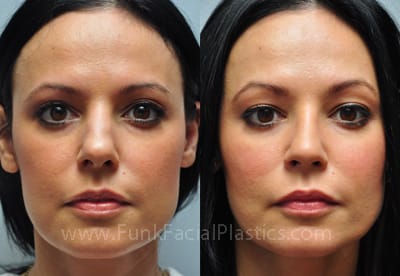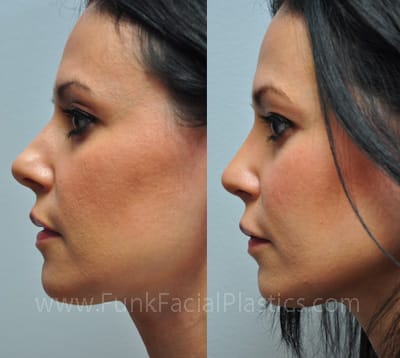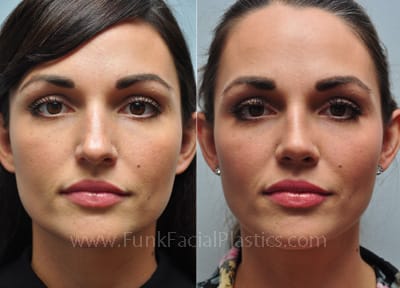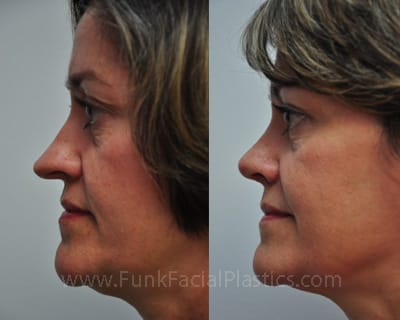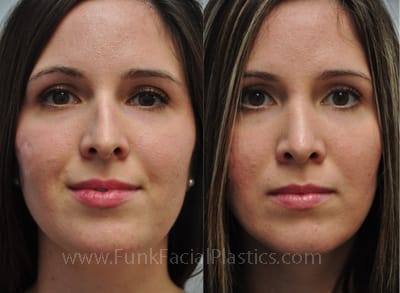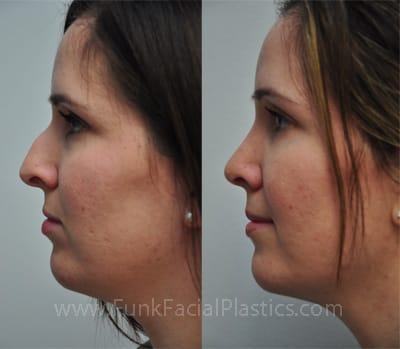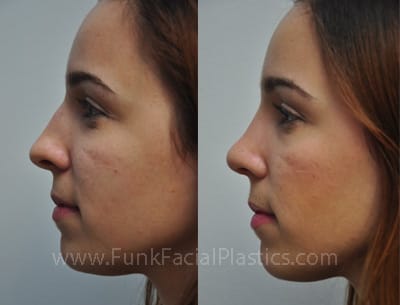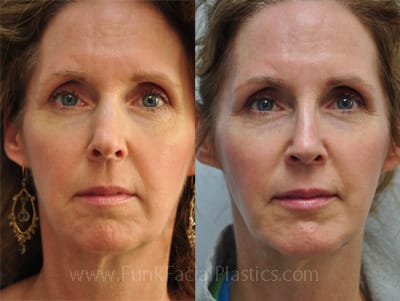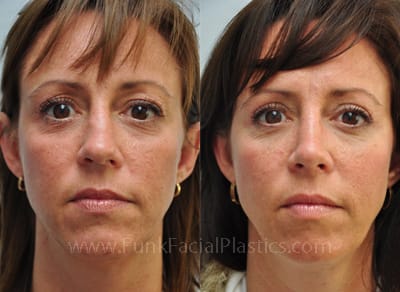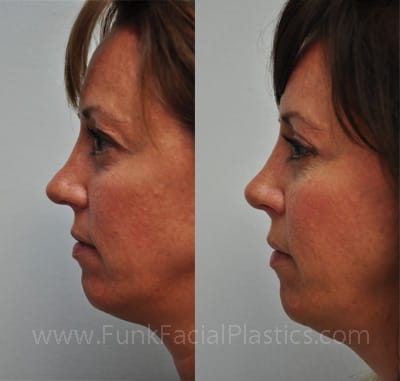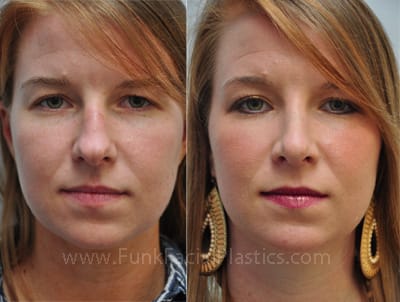
Houston Rhinoplasty Surgeon
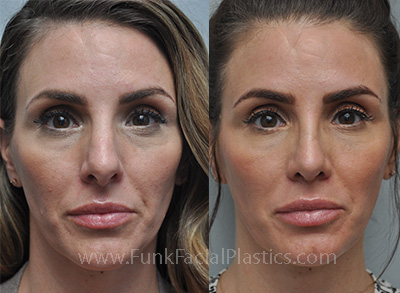
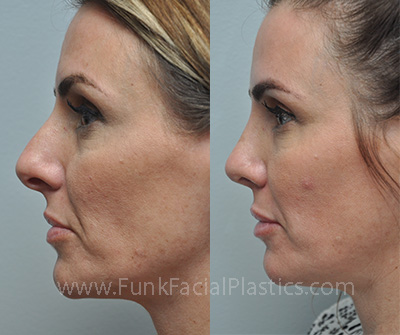
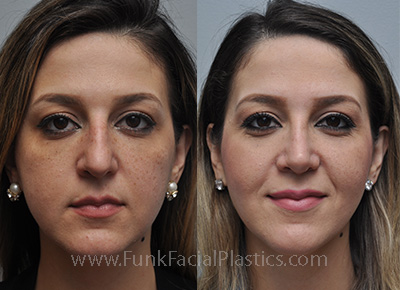
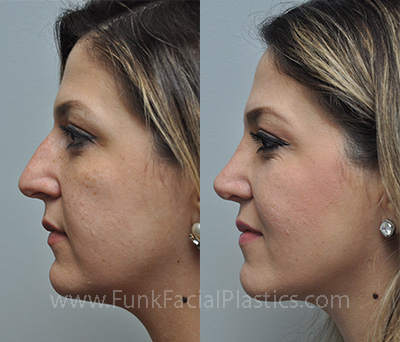
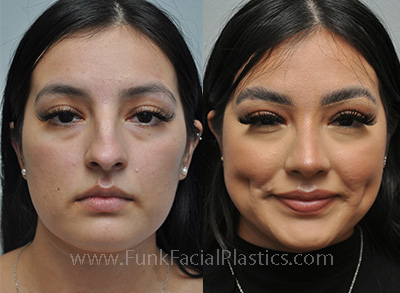
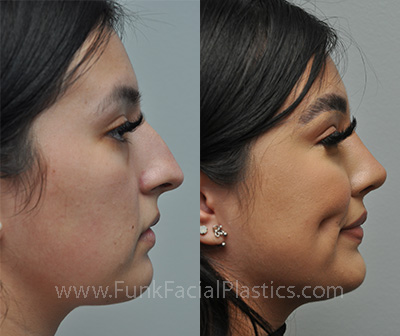
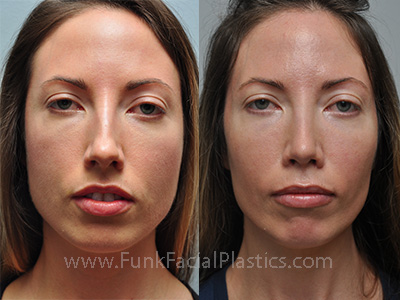
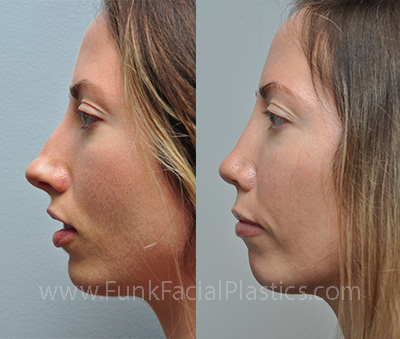
Rhinoplasty or nose surgery is one of the most commonly performed surgeries by Houston rhinoplasty and facial plastic surgeon, Dr. Etai Funk, MD, FACS to correct both cosmetic and functional issues. Every patient may have a different goal when considering rhinoplasty (nose job) or nose surgery. You may be seeking to reduce a nasal hump or bump, make a crooked nose straight, narrow a wide nose, refine a bulbous tip, or rotate a tip that hangs down too much. You might also have breathing problems due to a deviated septum, large turbinates, or valve collapse, which a rhinoplasty surgery can help correct.
Dr. Funk specializes not only in improving the appearance and proportion of your nose but also in enhancing facial harmony and self-confidence. Patients visit Dr. Funk from throughout Houston, TX including the Katy, Memorial City, Memorial, The Woodlands, Spring Cypress, and Sugar Land areas. Dr. Funk also sees patients from throughout Texas, out of state, and even overseas.
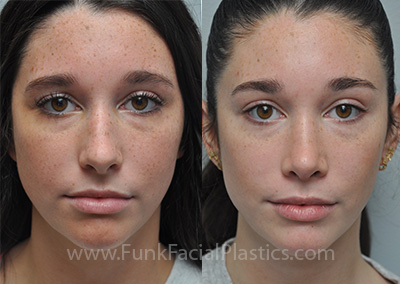
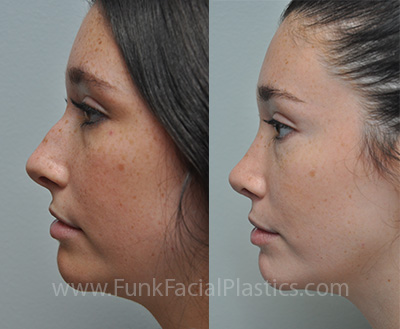
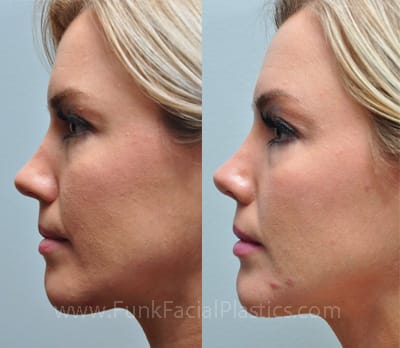
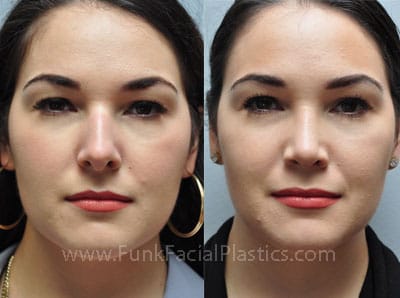
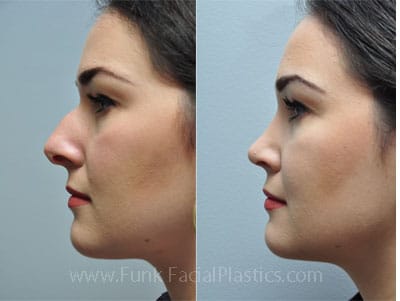
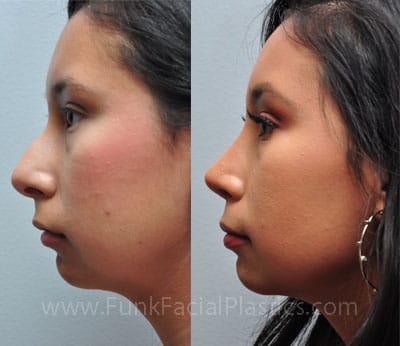
 View Rhinoplasty Before & Afters
Our Rhinoplasty Difference
When it comes to rhinoplasty, experience matters. Houston surgeon, Dr. Funk is a rhinoplasty specialist and is Double Board Certified in both Facial Plastic Surgery and Otolaryngology (ENT) Surgery. He performs hundreds of rhinoplasty surgeries and revision rhinoplasty procedures each year in Houston from local residents in the Greater Houston area, and patients all over Texas. View Testimonials Here and before and after photos below in our gallery to see the results!
Dr. Funk not only has a keen eye for the aesthetics of rhinoplasty but understands how to preserve and improve function. He also understands that each person’s face and aesthetic desires or goals are different. The same nose cannot apply to each patient. Dr. Funk will patiently listen to your concerns around your nose and together, create a plan for the nose you desire that would fit your face.
What Is Rhinoplasty?
Rhinoplasty is a surgery to change the external shape of the nose. Commonly referred to as a "nose job", rhinoplasty includes correcting intranasal issues such as a deviated septum, but its main goal is to improve the shape of the nose. Rhinoplasty, though a common procedure these days, requires exacting knowledge of the structure and the function of the nose. Some believe that rhinoplasty is the most difficult type of plastic surgery simply because every nose is different. In addition, there are close to 200 types of maneuvers, grafts, and suturing techniques described to change the shape of the nose. This organ possesses three-dimensional qualities that must be respected and maintained. The intricacies and nuances of rhinoplasty can be overwhelming and a surgeon must be well trained in this specialty.
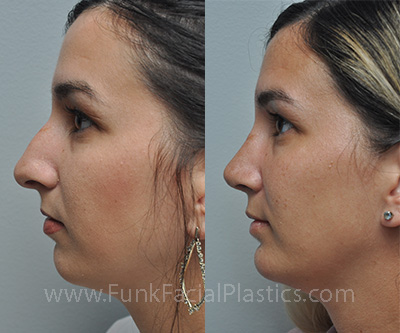
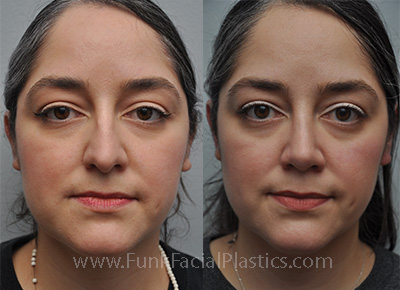
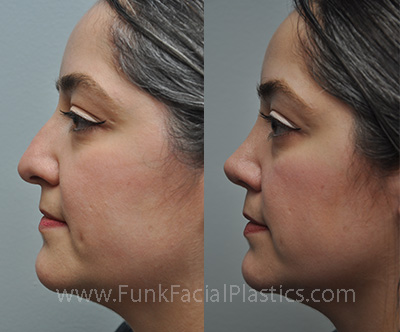
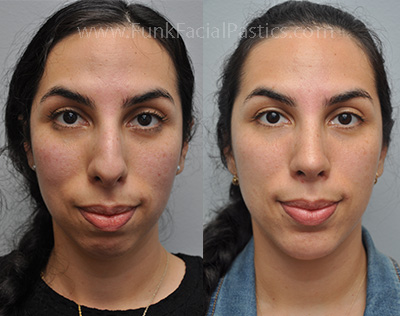
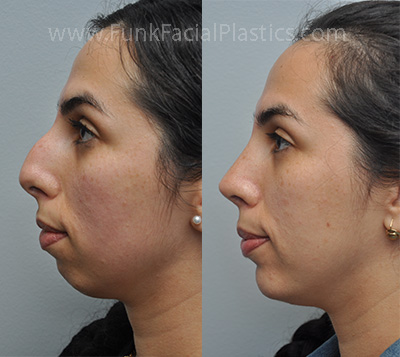
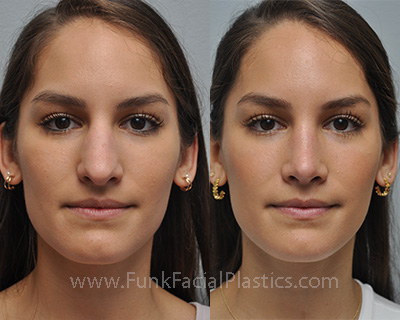
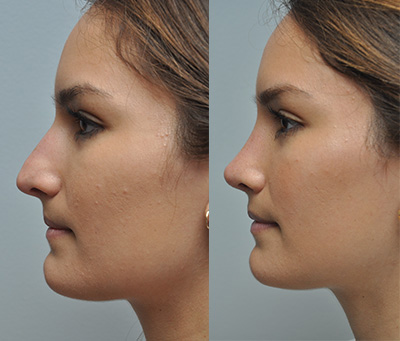
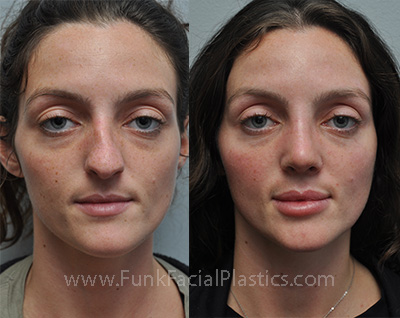
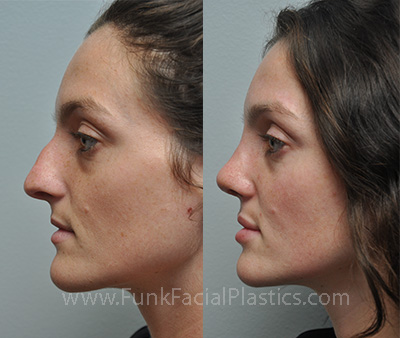
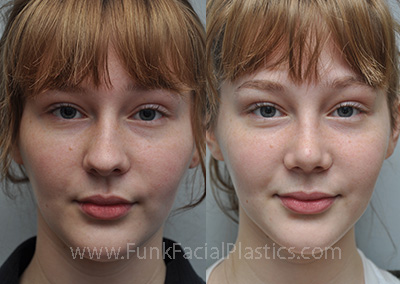
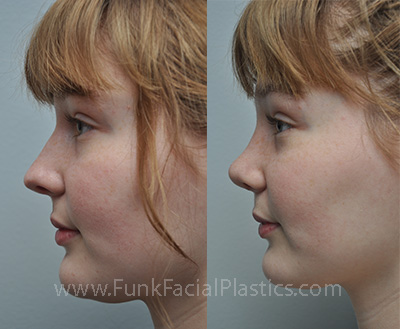
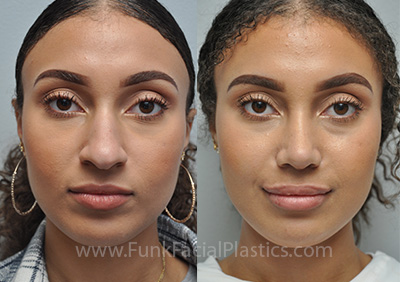
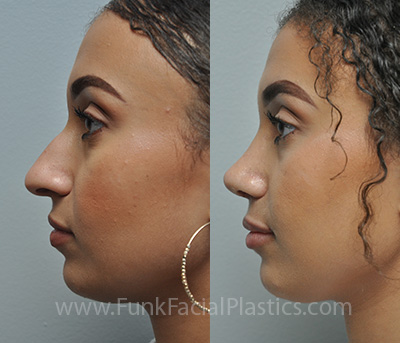
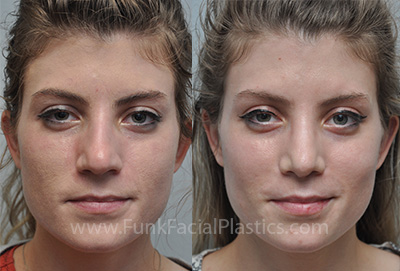
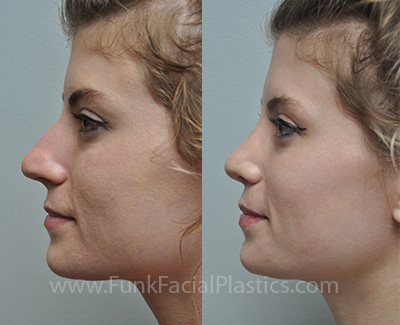
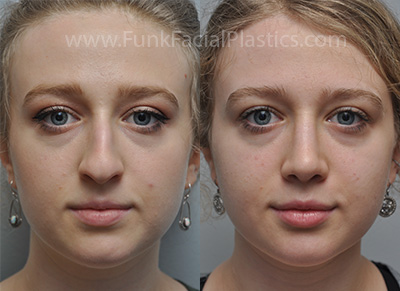
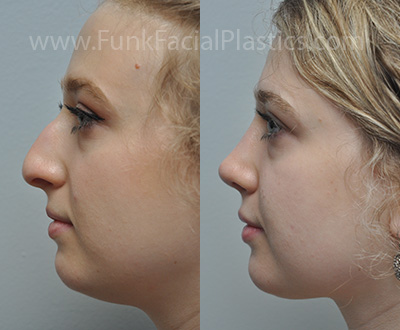
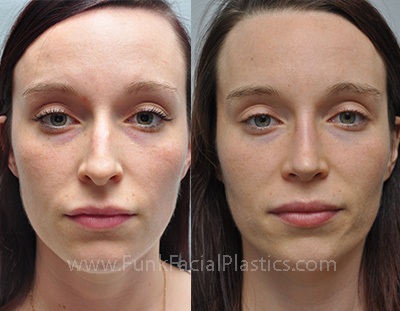
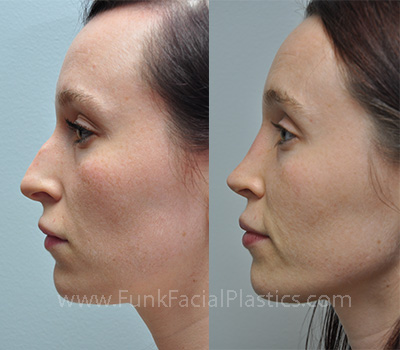
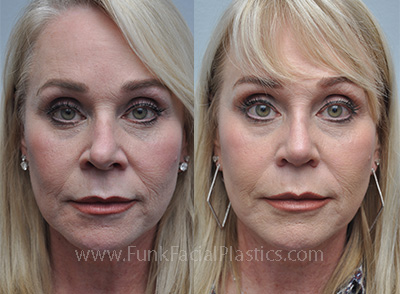
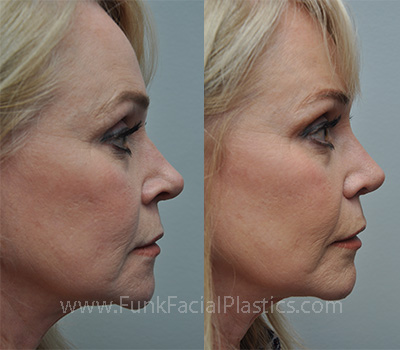
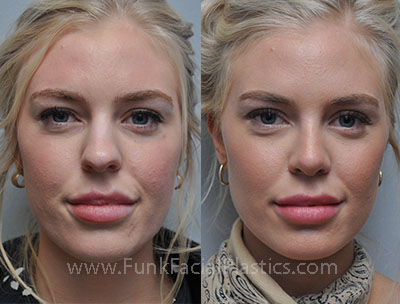
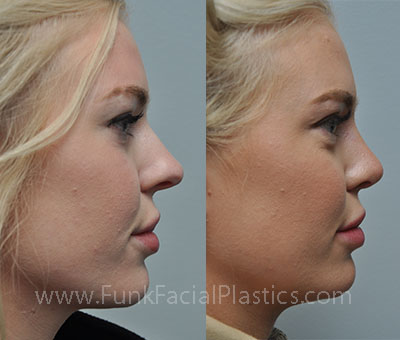
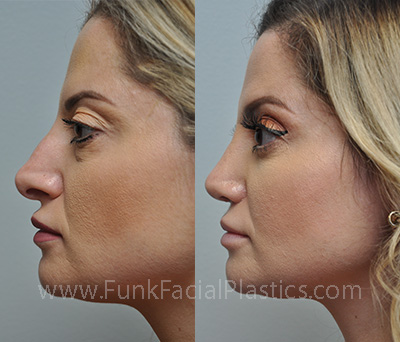
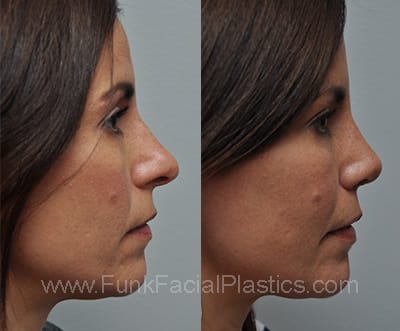
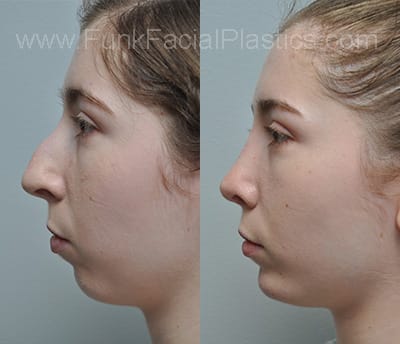
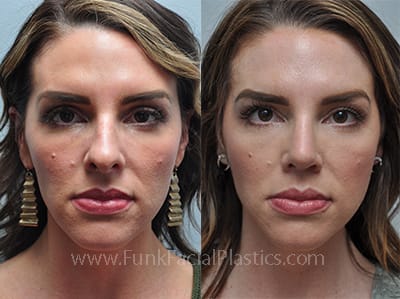
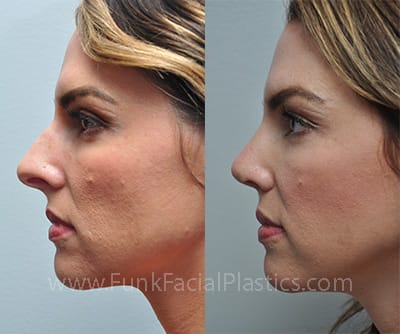
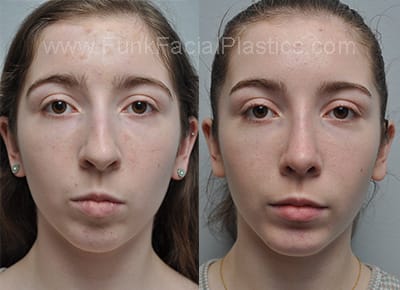
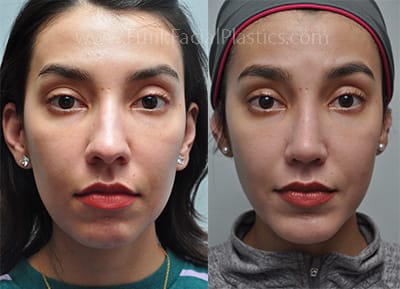
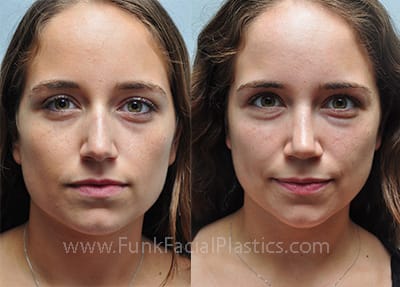
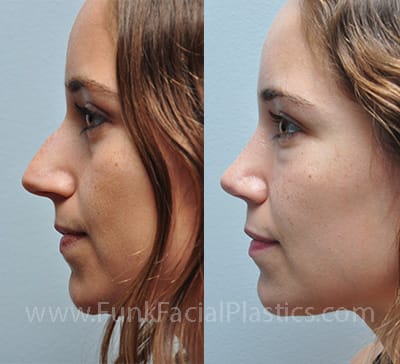
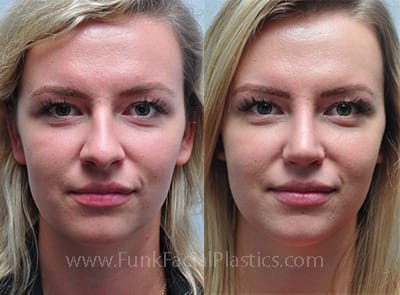
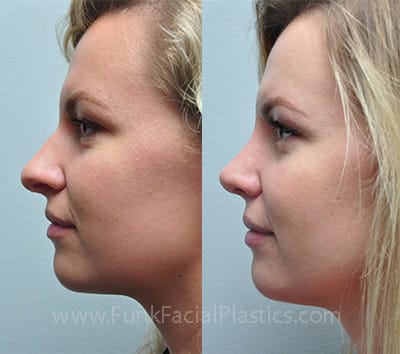
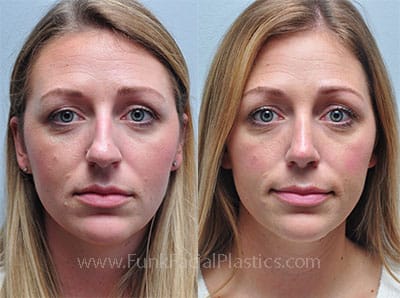
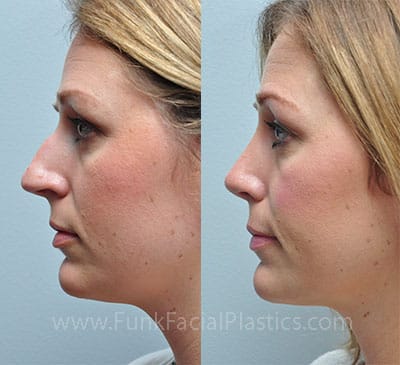
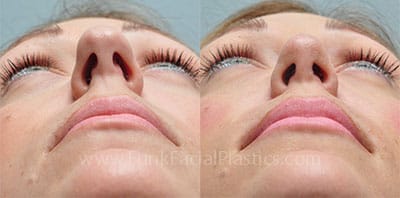
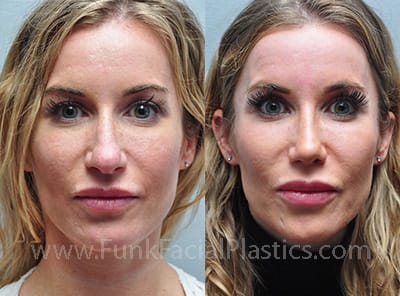
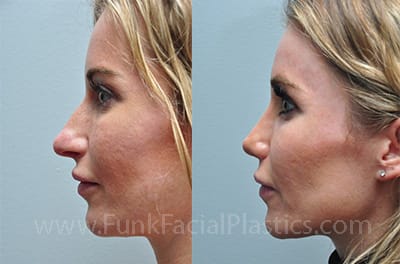
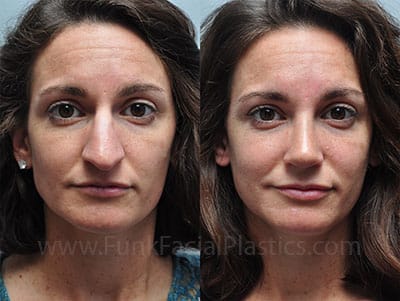
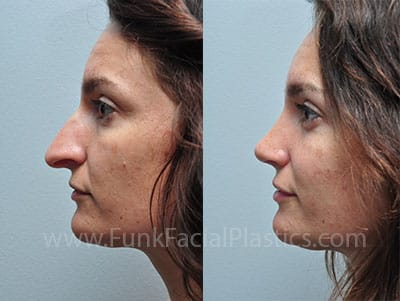
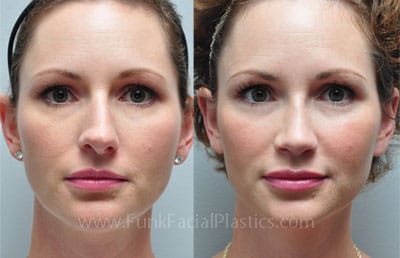
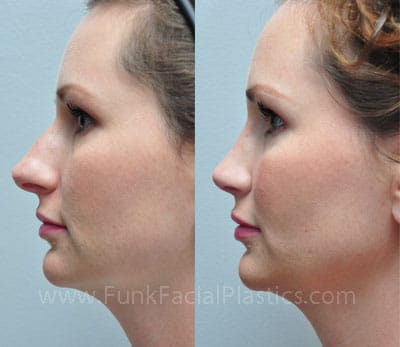
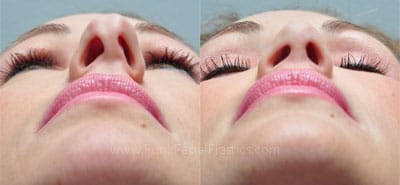
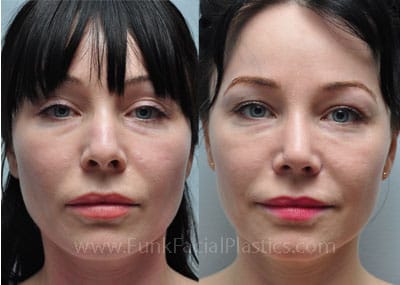
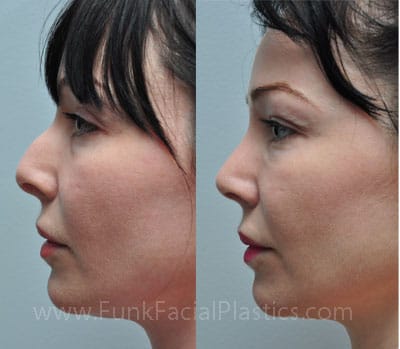
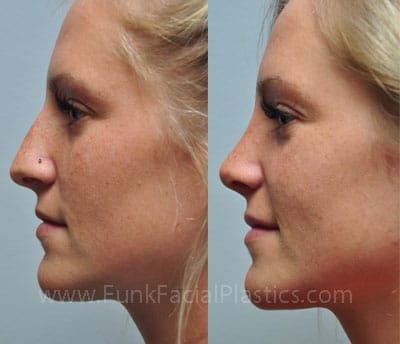
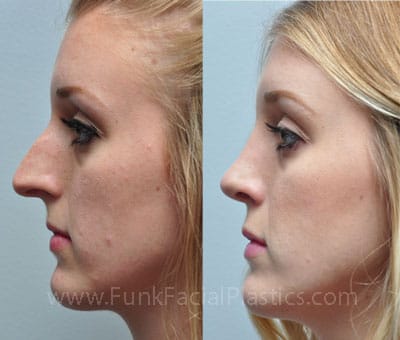
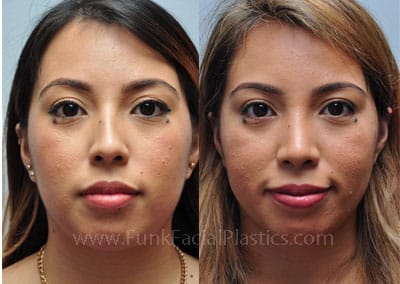
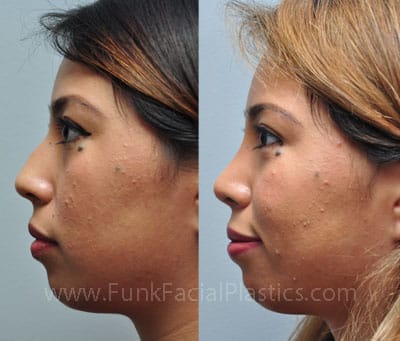
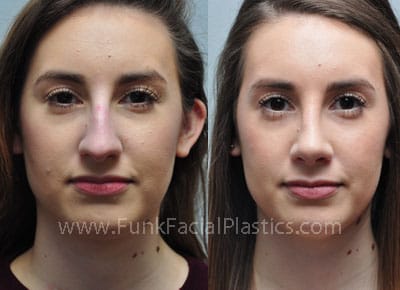
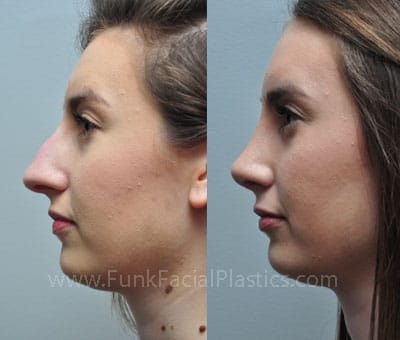
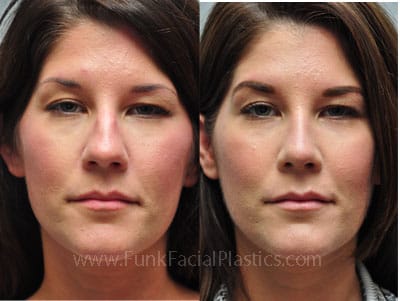
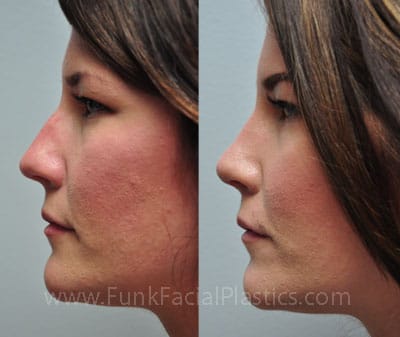
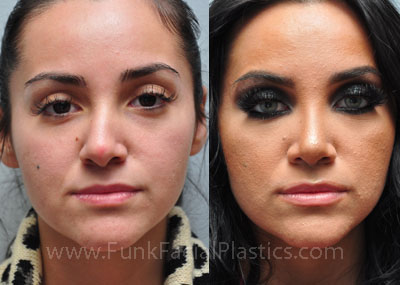
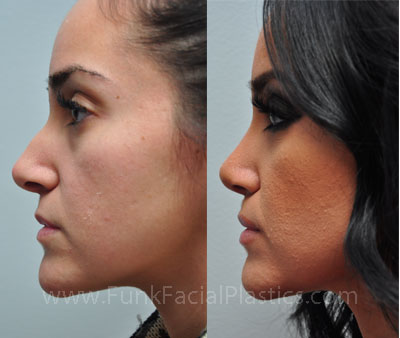
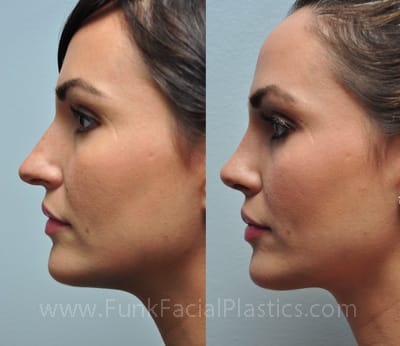
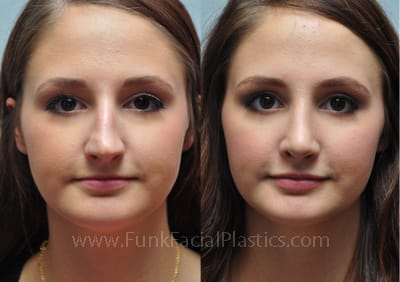
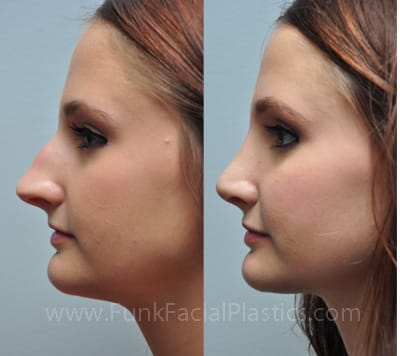
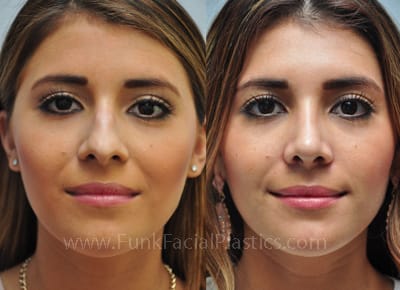
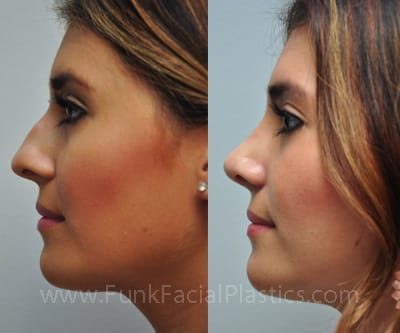
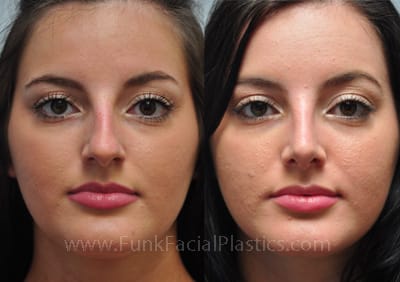
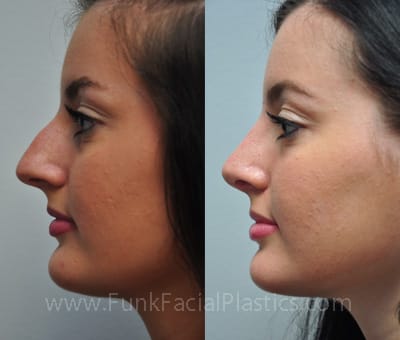
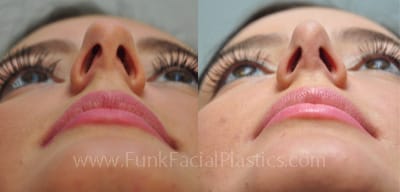
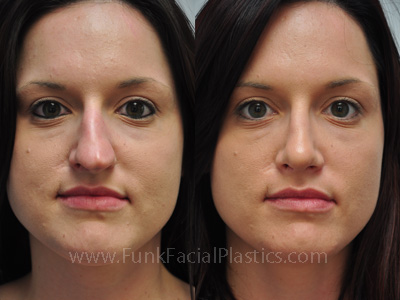
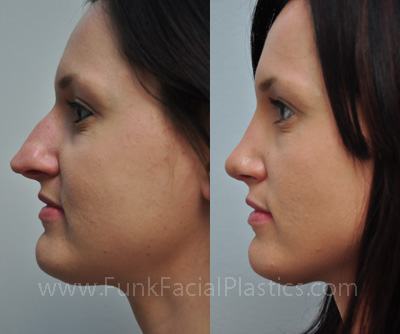
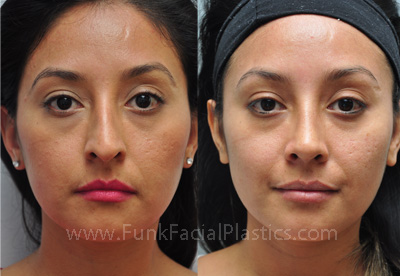
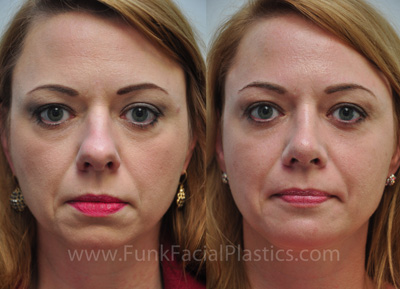
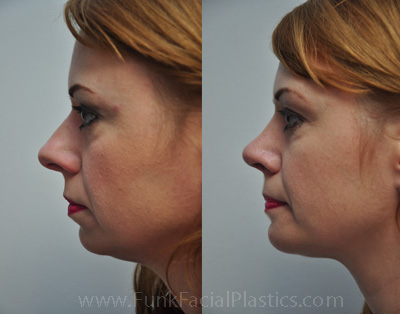
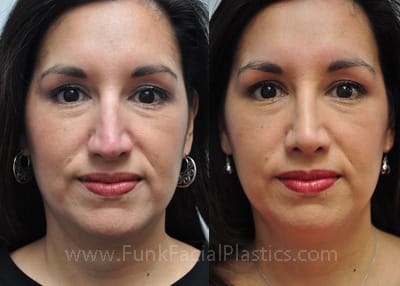
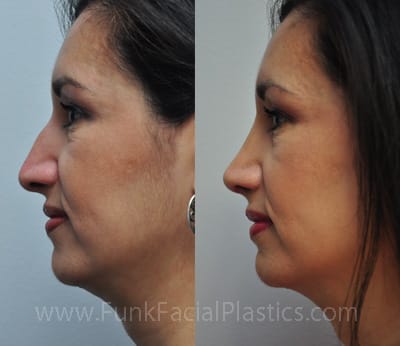
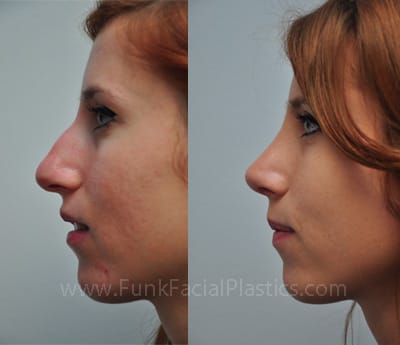
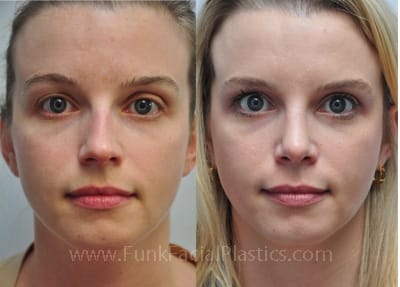
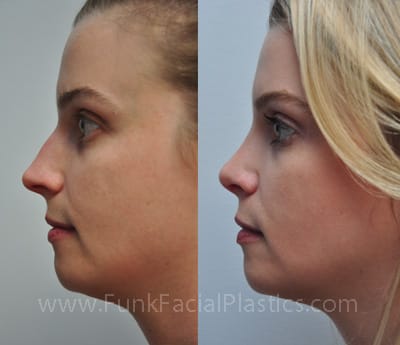
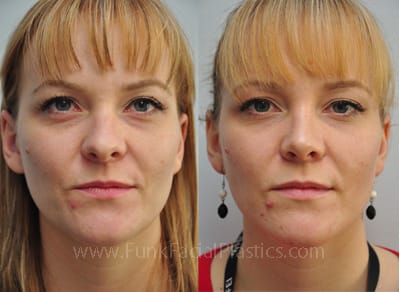
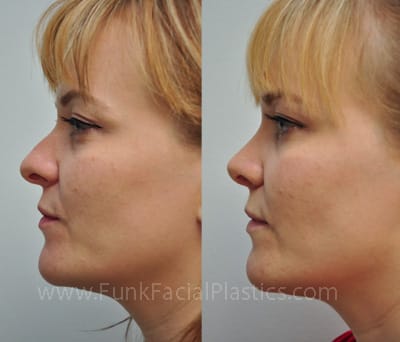
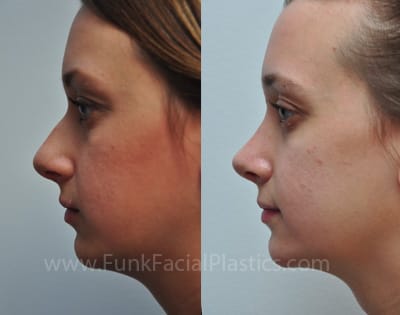
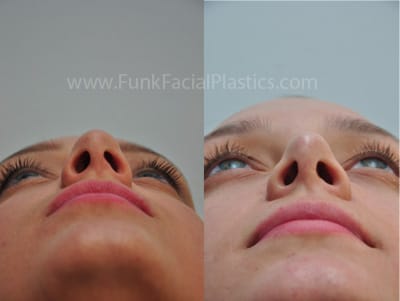
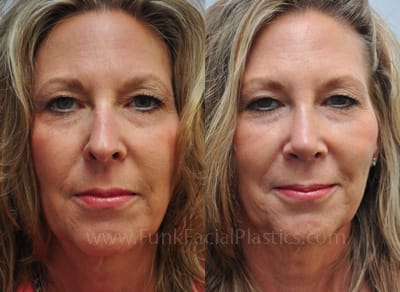
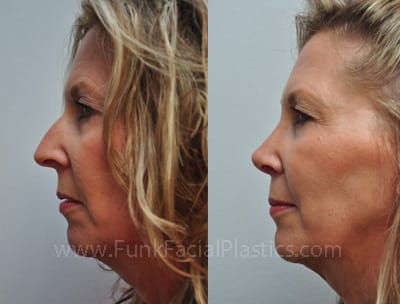
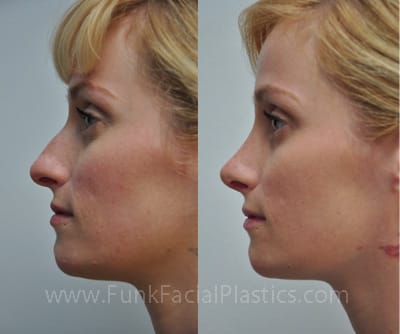
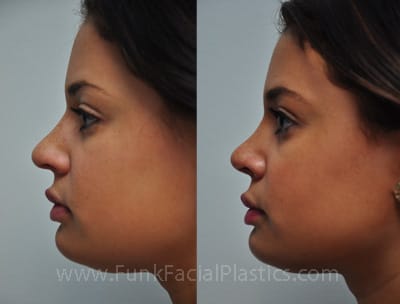
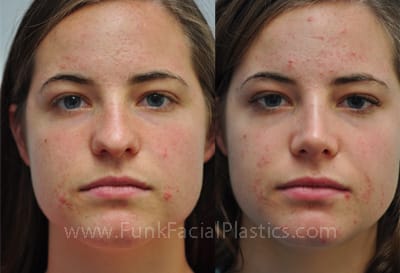
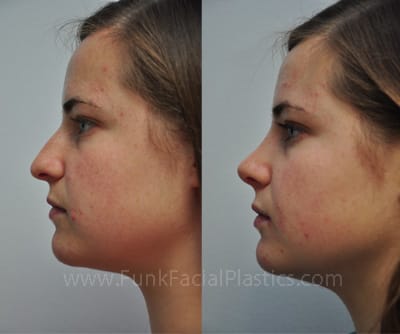
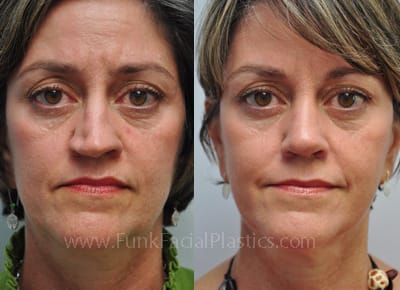
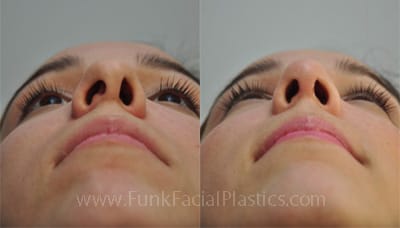
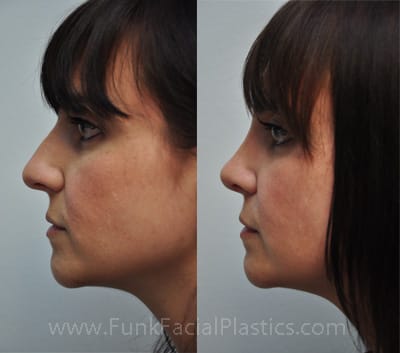
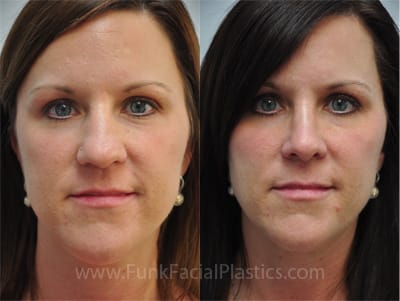
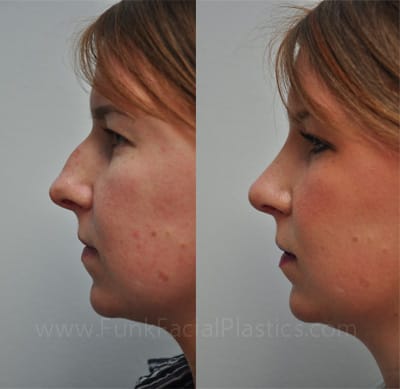
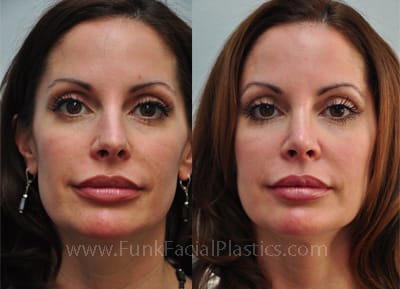
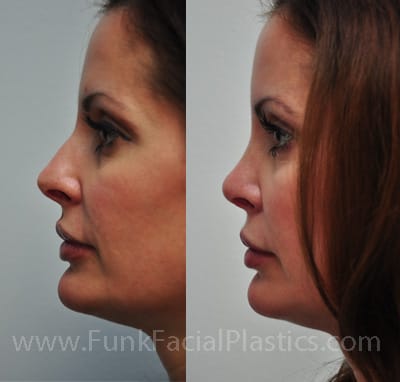
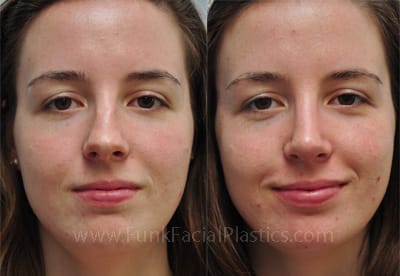
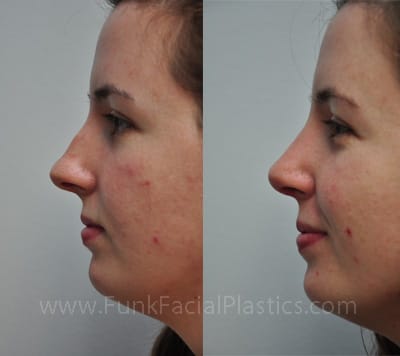
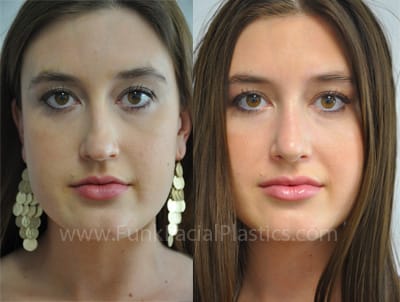
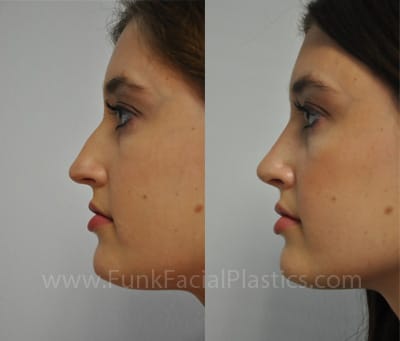
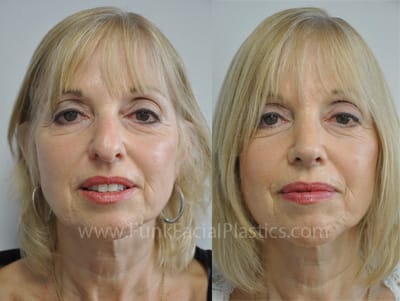
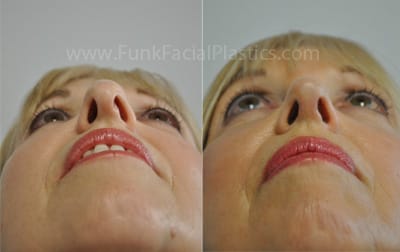
Dr. Funk performed rhinoplasty on this patient with a crooked twisted nasal tip, dorsal hump, and long nose. Her nose is now more feminine and elegant with a natural appearance. More before and after examples below.
How Much Does a Rhinoplasty Cost?
The cost of rhinoplasty is a common question among patients, and a major consideration when considering a surgery, along with choosing the right surgeon. If you have breathing problems due to a deviated septum, allergies, or repeated sinus infections that require surgery, this portion of your surgery will be paid for by your insurance (depending on the extent of your benefits). This will fray the cost of cosmetic fees for the facility (in Houston, TX) where Dr. Funk performs rhinoplasty surgery and the anesthesia fees. The majority of their bill will be paid by your insurance company (again, depending on your insurance benefits).
However, if you are interested in making cosmetic changes to the appearance of your nose such as addressing a hump or bump, refining the tip, making the nostrils smaller, or narrowing the nose, this will not be covered by insurance. There will be surgeon's, anesthesia, and facility fees for these aesthetic changes that you may desire.
What is Recovery Like After a Rhinoplasty?
Rhinoplasty or nose surgery is NOT a painful procedure. Patients will describe it as being uncomfortable for the first two days and by day three they start feeling better. Many of Dr. Funk's patients will only take one prescribed pain pill and some require none!
Dr. Funk DOES NOT USE PACKING after rhinoplasty. Dr. Funk feels that by using good surgical techniques and controlling the blood pressure during and after surgery, packing is not needed. Packing can lead to more pain and discomfort for patients and is frequently unnecessary.
You may have a small amount of bruising and swelling around the eyes after surgery. Dr. Funk's regimen of herbal remedies and cold Swiss therapy gel masks helps decrease this after nose surgery.
Recovery is eight days. On day six after surgery, Dr. Funk will remove your cast and some stitches. He will retape your nose and on day eight after surgery, he will remove that tape and all the stitches. You are social at this point! Most if not all of your bruising is gone by then. The nose will be swollen at this point but not noticeable to others. As the months pass by, your swelling will decline. At 3 weeks, 20-30% of the swelling is down. At 6 weeks 50-60% of swelling has abated. It will take a full year for all the swelling to subside. However, most of Dr. Funk's patients are thrilled with the appearance of their once the tape comes off and know it will only get smaller over time.
Common Rhinoplasty Questions
What will my rhinoplasty consultation be like with Dr. Funk?
Dr. Funks Consultation will include the following discussions and events:
- Dr. Funk will have a comprehensive discussion about your cosmetic concerns and objectives for rhinoplasty.
- Thorough questioning regarding any breathing or internal nose issues will be conducted.
- A detailed examination of your nose, both internally and externally, will be performed by Dr. Funk at his Houston office.
- Explanations will be provided regarding potential breathing problems linked to issues like deviated septum, enlarged turbinates, or valve collapse.
- Photographs will be taken, and an extensive review of these images will be done in collaboration with Dr. Funk.
- Digital rendering of your potential post-surgery nose appearance will be created according to your preferences.
- This rendering aims to give you a visual understanding of the potential outcomes of rhinoplasty and showcases Dr. Funk's aesthetic expertise.
- Ample time will be provided for thorough discussions, allowing you to feel at ease and build a strong rapport with Dr. Funk.
For more on our rhinoplasty surgery process from consultation to recovery, see our process.
What is the rhinoplasty surgery process like?
Dr. Funk begins with an extensive consultation with each rhinoplasty patient to understand their concerns and desired results. Dr. Funk will provide a thorough examination of the external and internal aspects of your nose. If there is a deviated septum or enlarged turbinates, he will discuss this with you, what it means, and what can be done to address these issues. After your consultation, our patient of care coordinator discusses your quote and insurance benefits if applicable.
After, you will have a preop appointment usually a day prior to the procedure to meet with Dr. Funk at his Houston office located in the Memorial City area. On your day of surgery, it is important to note that Dr. Funk has performed your rhinoplasty in his mind 3-4 times already - on the day of your consultation, at your preop, and the morning of surgery. Dr. Funk will perform your rhinoplasty at an accredited surgery center in Houston with an anesthesiologist, nurse anesthetist, nurse, and surgical technician. Rhinoplasty duration varies but usually takes 2-3 hours. You will be in recovery for about one hour and then be discharged home.
For more details specific to rhinoplasty surgery process and a recovery timeline, please go to our rhinoplasty process page.
Is Rhinoplasty worth it?
This is a question that many patients likely ask themselves.
- Is rhinoplasty worth the one-week recovery?
- Is it worth the discomfort postoperatively?
- Is it worth the cost?
- Is it worth the risk of undergoing surgery?
Ultimately, this is a question you must answer yourself. However, many of Dr. Funk's patients have stated that they had wished they had the surgery long earlier after realizing how much they loved their new nose and how tolerable the postop period was. When shown their result, may of Dr. Funk's patients have said, "In my mind, this is the nose I always thought I had". Dr. Funk has had many patients cry and shed tears of joy at 8 days after their tape is removed as their nose had caused them such angst and insecurity throughout their lives. He has seen teenage girls develop significantly more confidence postoperatively and other patients have stated they never feel shy in front of the camera or are afraid of getting a profile photo taken. Rhinoplasty or nose reshaping is a surgery that has changed the lives of many of Dr. Funk's patients.
If I have a deviated septum, will insurance pay for my rhinoplasty?
This is a common question asked by many of our patients. Depending on your benefits (deductible, etc.), insurance will pay for a certain portion of the functional components of your rhinoplasty such as septoplasty or turbinate reduction if you have breathing problems. Insurance will not pay for any cosmetic changes made to the shape of the nose. However, utilizing insurance for the functional part of your surgery will fray a good portion of your cosmetic costs for Dr. Funk's fees, the facility, and anesthesia.
Will Rhinoplasty help my breathing?
Rhinoplasty can address breathing issues that you may have. Dr. Funk is board certified in Ear, Nose, and Throat Surgery as well so is fully capable of identifying and treating nasal breathing problems. Cosmetic rhinoplasty alone will not improve your breathing, but nasal airway obstruction can be treated while making changes to the appearance of the nose.
Will Dr. Funk show me what my nose might look like after surgery during the consultation?
Dr. Funk does perform digital enhancement of your photographs during your consultation. This will provide you with an idea of what your nose may look like after surgery. At this time, you can have input as to how you might want your nose to look like. Dr. Funk will aslo provide his aesthetic opinion and explain what he would be capable of with rhinoplasty.
What kind of result can I expect from Rhinoplasty?
Dr. Funk's prides himself on creating a natural appearing nose after nose surgery. One that fits your face and blends in easily with your face allowing attention to be drawn to your eyes, hair, and lips. A nose can distract attention away from these features when it is a crooked nose, has a hump, AND if it looks operated. The last thing you want is someone looking at you and the first thing they think is "nose job!".
What is Preservation Rhinoplasty?
Preservation rhinoplasty is a surgical technique in which the normal nasal anatomy is preserved as much as possible. The objective with preservation rhinoplasty is to create aesthetically pleasing results with a natural look that preserves the integrity of the nose.
Not every patient is a candidate for the let down or push down form of preservation rhinoplasty for a nasal hump. Dr. Funk will evaluate you during your consultation, examine your nose, and discuss the best option to obtain the most pleasing, natural and long lasting form of rhinoplasty that will be right for you.
Read more on preservation rhinoplasty on our blog and schedule a consultation.
How do I pick a good rhinoplasty surgeon?
Choosing the right surgeon may be difficult for any procedure you are considering. However, rhinoplasty or cosmetic nose surgery can be one of the most complex types of plastic surgery. You are dealing with a facial structure that clothing cannot hide after surgery. The nose is not just composed of soft tissue and skin like the breast, abdomen or eyes. There is also cartilage and bone that needs to be addressed. Not to mention the functional or breathing aspect of the nose that must be respected if not improved.
It is important to seek a surgeon who not only understands how to attain an aesthetically pleasing nose but maintain a good nasal airway and breathing. It is important to ask your surgeon how many nose jobs they perform per year and how comfortable they are with YOUR nose. You should see eye to eye with your surgeon regarding expectations for your outcome and review digital imaging with him or her. You should be able to review their before and after photographs, appreciate the changes made, and find a nose similar to your own. In the end, this is your face and you should feel most comfortable with the surgeon that is taking it in his/her hands.
Patients from outside of Houston, all around Texas, and even internationally come to see Dr. Funk.
Can rhinoplasty fix a crooked nose?
A crooked nose due to trauma, pubescent growth, a deviated septum, or misplaced cartilage can distract significant attention from the features of your face you want people to notice. You do not want people staring at your nose but want them to concentrate on your eyes, lips, or hair. A deviated nose or canted nose can be fixed with controlled fractures of the bone and cartilage grafting.
A crooked nose is one of the hardest types of noses to fix with surgery or rhinoplasty. Cartilage has memory and wants to move back to its original position. A nose job for a crooked nose needs to incorporate grafts, suture maneuvers, controlled fractures of the nasal bones, and most important - a good surgical plan. Most noses will remain straight after surgery, however, the healing process is never predictable. Dr. Funk always promises his patients that their nose will be perfectly straight on the operating room table, but can only promise a "straighter" nose long term.
Does Rhinoplasty treat a deviated septum too?
The septum is the wall that separates the two sides of the nose and is composed of cartilage and bone. Deviated septum surgery is commonly combined with rhinoplasty or a nose job. You may have breathing problems due to a deviated septum that can be corrected with septoplasty. The downtime or recovery after deviated septum surgery is the same as rhinoplasty and septoplasty should not cause any more pain, bleeding, or issues than rhinoplasty alone.
What happens during a rhinoplasty surgery?
Rhinoplasty or a nose job is a very intricate type of surgery performed either by facial plastic surgeons or plastic surgeons. With rhinoplasty, the bone and cartilage under the skin is carved, contoured, grafted, and shaped to an aesthetically pleasing appearance. The nose is refined and frequently, the airway is opened to improve breathing. The skin is then allowed to heal and contract after nose surgery over the new bony and cartilaginous framework.
Why does the appearance of my nose bother me?
Rarely do we hear comments like, "She has a beautiful nose!". We are meant to notice people's eyes, lips, and hair. These are the features we continuously focus our attention to with models, actors, and actresses. Those of us who do focus on others' noses may be unahppy with our own nose. This self conscious feeling about our nose may come and go throughout our life, but ultimately will prevail. Patients seeking rhinoplasty will frequently state during their consultation, "I have never liked my nose".
Although the nose may sit in the middle of the face, it should really be invisible. Our attention should not be drawn to the nose. A nose that is crooked, has a bump or hump, is too long or too wide, or even one that looks operated, can distract from the features we want people to notice like our eyes. It is said that a a good rhinoplasty is not seen in the nose but in the eyes. It is important to obtain a natural and unoperated result with rhinoplasty which is something Dr. Funk prides himself on.
How do I know Dr. Funk is the best rhinoplasty surgeon for me?
Choosing the right plastic surgeon is a personal decision. The first step is to confirm that surgeon's credentials and assure that they are board certified. Dr. Funk is double board certified in ear, nose, and throat surgery, and facial plastic surgery. He can therefore address your breathing issues and any cosmetic concerns you may have. Next, it is important to read that surgeon's website. Understand that surgeon's philosophy on rhinoplasty and aesthetics. In addition, assure that the surgeon has been trained appropriately at the proper institutions. Lastly, it is important to review that surgeon's work. If the photo gallery has 20 before and after photos of breast augmentation and 2 rhinoplasties, they may not be as experienced with rhinoplasty as they are with other procedures. Assure you like the before and after results for in the rhinoplasty photo gallery.
The next step is the consultation. Did you get enough time with the plastic surgeon? Did you feel comfortable with the surgeon? Were you confident of their skills and plan for your nose surgery? Did you like his/her digital enhancement of your nose and did the surgeon do it themselves or a staff member? Did you feel at ease with the staff and did they explain the quote and your benefits effectively? Did you leave the surgeon's office excited for your rhinoplasty? Were all your questions answered?
It is also important to know how many rhinoplasties per year your surgeon performs. The average plastic surgeon performs under 20 nose surgeries per year. Dr. Funk performs close to 150 rhinoplasties per year. The majority of these are combined functional or breathing with cosmetic surgery. Nose surgery is Dr. Funk's specialty and he receives many referrals from other plastic surgeons in Houston for difficult rhinoplasty surgeries or complex noses.
At what age can I have rhinoplasty?
Rhinoplasty or nose surgery can be performed once the nose has stopped growing and pubescent growth is completed. This can vary in males and females but is typically between 15-17 years of age. Rhinoplasty can be performed at any time after that. As long as you have no medical reasons that would prevent you from undergoing surgery, a nose job or nose surgery can be done at all ages of adulthood.
Will Rhinoplasty change my smile?
Rhinoplasty or nose surgery should not change your smile significantly. There are many muscles around the mouth and some interdigitate with the muscles of the nose. At times, when you smile, the tip of the nose may droop or the nostrils may flare, or they may widen. Rhinoplasty surgery can address these nasal issues with smiling. The upper lip may be more apparent after rhinoplasty with smiling if the tip is rotated. Your smile may feel very tight during the first few weeks after surgery. This will soften and loosen up over time.
What happens when I have my nose surgery?
You will check in at the facility where Dr. Funk performs rhinoplasty and they will start an IV. Rhinoplasty is done under general anesthesia and takes about 2 hours depending on the complexity of the nose. Dr. Funk will make a small incision between your nostrils and the rest of the incisions are on the inside of the nose. When you awaken after your rhinoplasty, you will have a small cast on your nose, a Swiss therapy gel mask over your eyes and a guaze drip pad under your nose to catch any drainage. Expect discomfort but not a lot of pain after nose surgery. You may have some bruising under and around your eyes which should resolve within the week. Once the cast and tape come off, expect to have some swelling. This will last for weeks, but you WILL see a dramatic improvement after surgery. As the swelling resolves, your nose will look better and better. It simply takes time for the skin to readhere and redrape over the new cartilage and bony framework.
Can Dr. Funk fix my bulbous tip or wide nostrils?
A bulbous tip or wide base of the nose with wide nostrils is typically due to the shape of the cartilage in the tip. This nose cartilage can be refined using many techniques. The nostrils can be narrowed by excising a small amount of triangular skin just inside the nostril in a shadowed area where the scars heal well. Read more on rhinoplasty for bulbous tips.
Does Dr. Funk perform open or closed rhinoplasty?
Dr. Funk performs both open and closed rhinoplasty in Houston. He does feel that the open approach allows for better visualization of the bony and cartilaginous framework and allows for more precise graft and suture placement. This ultimately leads to a more predictable and improved result. Although there is a little more initial swelling with the open approach, Dr. Funk feels that the final result is well worth the wait to be able to assure you get the outcome you desire from you nose surgery. The external approach does leave a very small scar between the nostrils, but Dr. Funk has yet to have a patient complaint abou this scar. He closes this incision meticulously and it is almost completely unnoticeable at one month after rhinoplasty.
Is there packing after Rhinoplasty?
Dr. Funk does not use packing after rhinoplasty or nose surgery. Packing can lead to unnecessary discomfort and pain. Dr. Funk feels that by using careful surgical technique along with controlling the blood pressure and heart rate effectively, packing can be avoided in almost all cases.
Is Rhinoplasty permanent?
Many plastic surgery procedures will require repeat surgeries in the future. A facelift does not stop the aging process and will last 10-15 years. Another facelift will likely be needed at that point. Breast augmentation may require implant exchange every 10 years. However, the results of a rhinoplasty are permanent. Once the swelling has completely subsided, the grafts that are placed and scarring that has occurred will be subject to the effects of aging and gravity like the rest of the face and body. Unless you are unahppy with your result and are desiring revision rhinoplasty, repeat nose surgery is quite rare after a successful primary rhinoplasty.
I had a bad nose job. Can Dr. Funk fix this?
Dr. Funk is a revision rhinoplasty expert in Houston. 20-30% of his rhinoplasties are revisions due to an undesired result from a previous surgery with a different surgeon. Please go to our revision rhinoplasty page and read about some of our patients issues and results.
Am I a candidate for non-surgical rhinoplasty?
Non-surgical rhinoplasty or reshaping the nose using a facial filler such as Restylane, Juvederm, or Radiesse has gained popularity but is not highly recommended by Dr. Funk. Unlike other areas of the face where we lose volume (cheeks, temples, etc.), the nose is not an area where this occurs. Fillers can lead to irregularities and permanent scarring that make surgery quite difficult. Fillers in the nose will not improve any of the airway issues patients may have. The only time Dr. Funk may recommend fillers is if the patient is not a good surgical candidate due to medical reasons or if a very minor touch up or depression is needed to be filled after surgery.
Rhinoplasty Before & After Photos
-

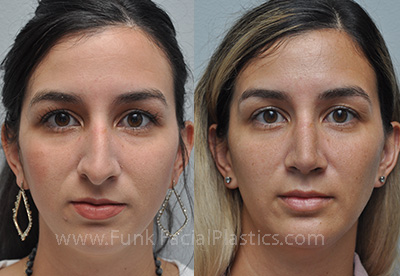
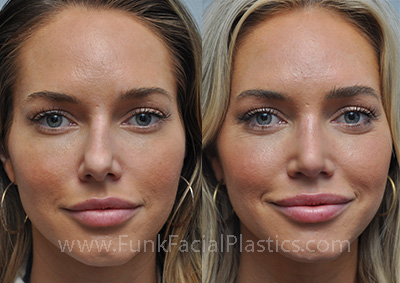
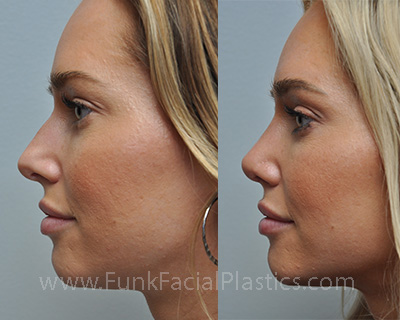
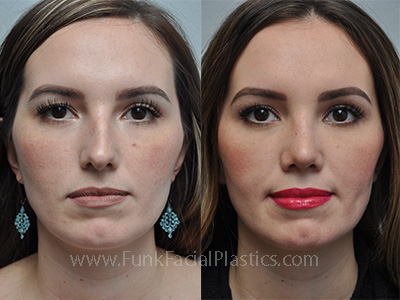
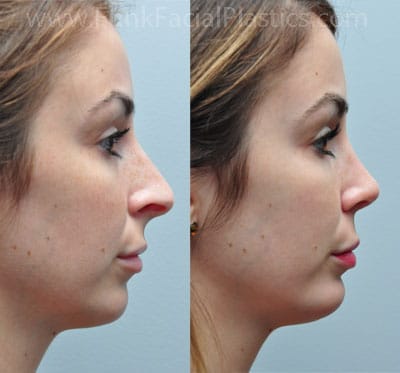
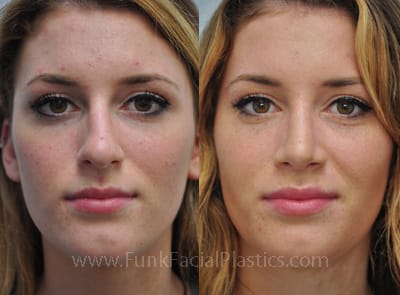
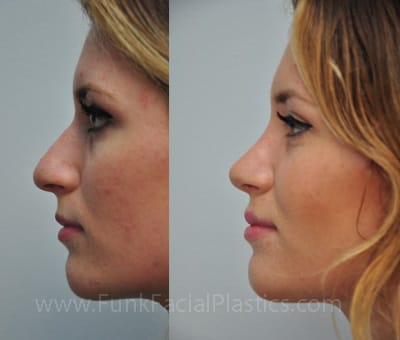
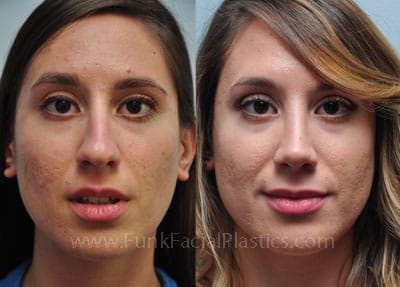
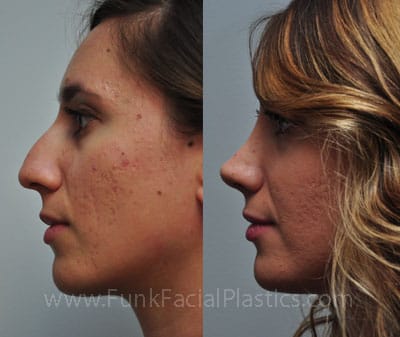
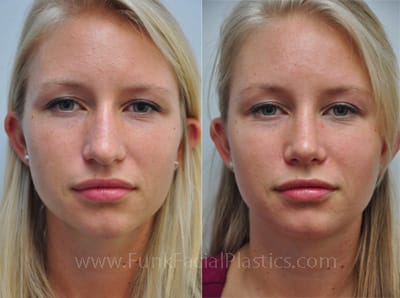
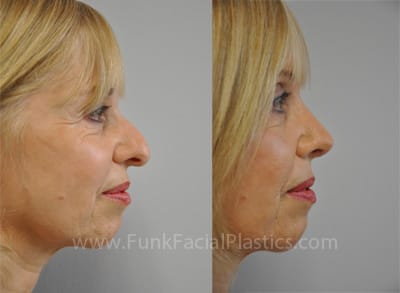
Dr. Funk performed rhinoplasty on this patient with a nasal hump to create a more feminine and elegant nose.
-

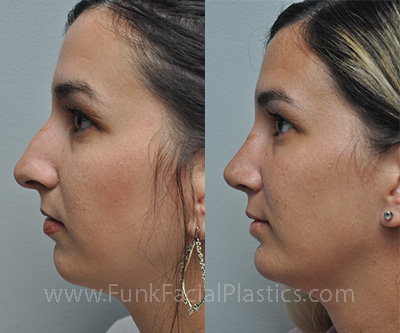
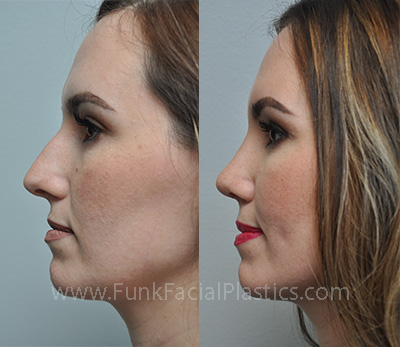
Dr. Funk performed rhinoplasty on this patient with a nasal hump to create a more feminine and elegant nose.
-

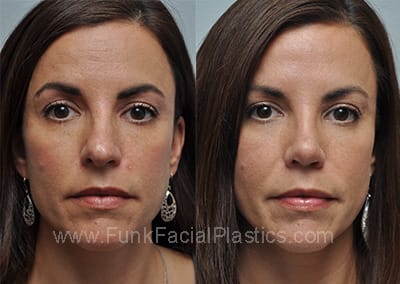
Rhinoplasty was performed by Dr. Funk in Houston on this patient with a saddle nose deformity. Rib cartilage was used to reconstruct her nose.
-

Rhinoplasty was performed by Dr. Funk in Houston on this patient with a saddle nose deformity. Rib cartilage was used to reconstruct her nose.
-

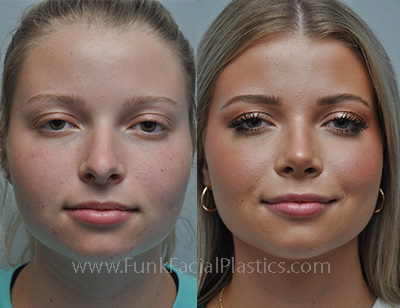
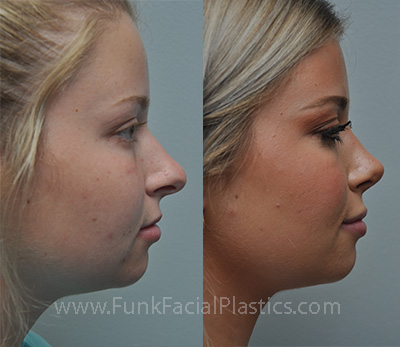
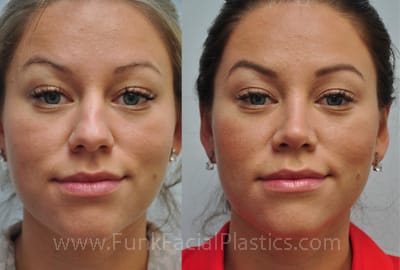
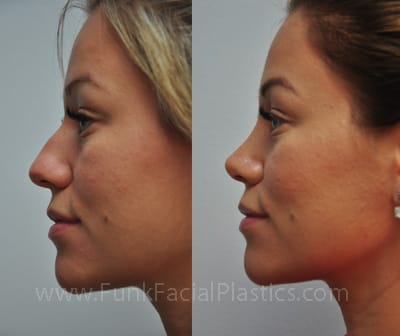
Rhinoplasty was performed in Houston by Dr. Funk to create a smaller and more balanced nose for this patient. She also underwent chin augmentation which created a more proportionate and harmonious face.
-

Rhinoplasty was performed in Houston by Dr. Funk to create a smaller and more balanced nose for this patient. She also underwent chin augmentation which created a more proportionate and harmonious face.
-

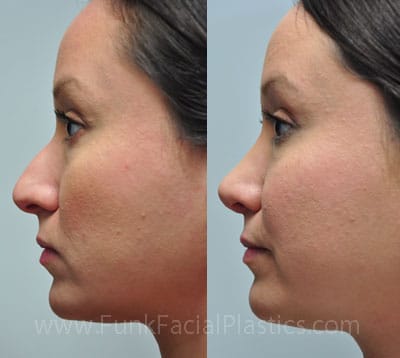
Dr. Funk performed rhinoplasty on this patient with a crooked twisted nasal tip, dorsal hump, and long nose. Her nose is now more feminine and elegant with a natural appearance.
-

Dr. Funk performed rhinoplasty on this patient with a crooked twisted nasal tip, dorsal hump, and long nose. Her nose is now more feminine and elegant with a natural appearance.
-

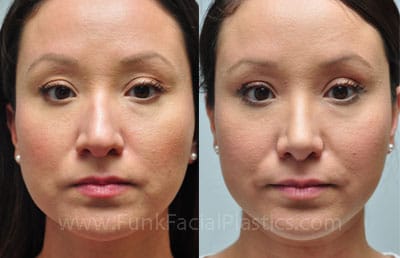
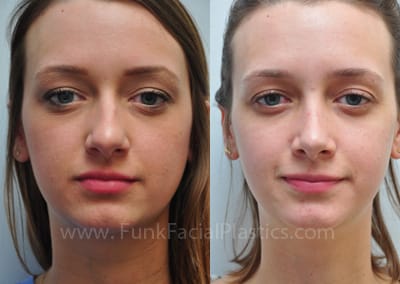
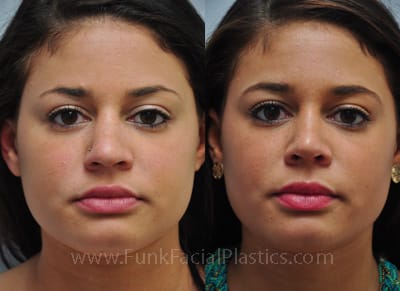
Rhinoplasty was performed in Houston by Dr. Funk on this patient with a wide prominent nose. She now has a more feminine, smaller, and refined nose.
-

Rhinoplasty was performed in Houston by Dr. Funk on this patient with a wide prominent nose. She now has a more feminine, smaller, and refined nose.
-

Dr. Funk performed rhinoplasty in Houston on this patient with a nasal hump, droopy and bulbous nasal tip.
-

Dr. Funk performed rhinoplasty in Houston on this patient with a nasal hump, droopy and bulbous nasal tip.
-

This patient had rhinoplasty with Dr. Funk in Houston for a wide nose with a nasal hump. She now has a more elegant nose that fits her face.
-

This patient had rhinoplasty with Dr. Funk in Houston for a wide nose with a nasal hump. She now has a more elegant nose that fits her face.
-

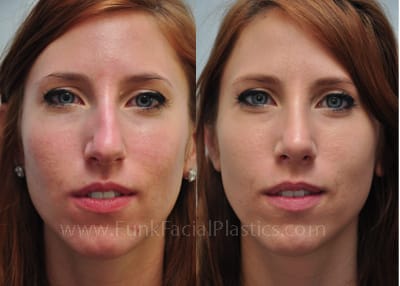
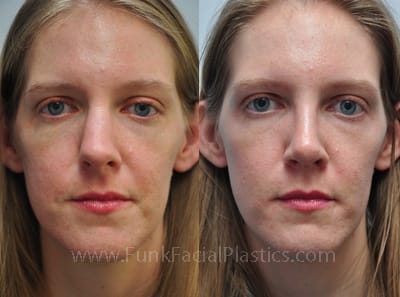
This patient had rhinoplasty in Houston with Dr. Funk to create a straighter, more feminine, and refined nose.
-

This patient had rhinoplasty in Houston with Dr. Funk to create a straighter, more feminine, and refined nose.
-

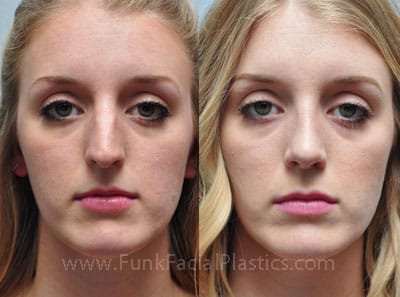
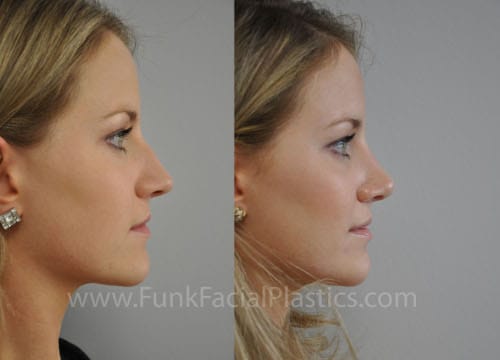
Dr. Funk performed rhinoplasty on this patient with a dorsal hump to create a softer more feminine nose.
-

Dr. Funk performed rhinoplasty on this patient with a dorsal hump to create a softer more feminine nose.
-
Dr. Funk performed rhinoplasty in Houston on this patient with a dorsal hump to create a more feminine, elegant, and softer nose.
-
Dr. Funk performed rhinoplasty in Houston on this patient with a dorsal hump to create a more feminine, elegant, and softer nose.
-

Bulbous tip correction and nose straightening performed in Houston with rhinoplasty by Dr. Funk. Dorsal hump has also been addressed with a more refined, elegant and feminine nose.
-

Bulbous tip correction and nose straightening performed in Houston with rhinoplasty by Dr. Funk. Dorsal hump has also been addressed with a more refined, elegant and feminine nose.
-

Subtle changes were made to this crooked nose with a sharp tip and strong dorsum using rhinoplasty techniques. Surgery was performed in Houston Texas.
-

Subtle changes were made to this crooked nose with a sharp tip and strong dorsum using rhinoplasty techniques. Surgery was performed in Houston Texas.
-
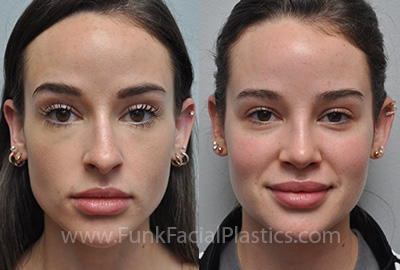
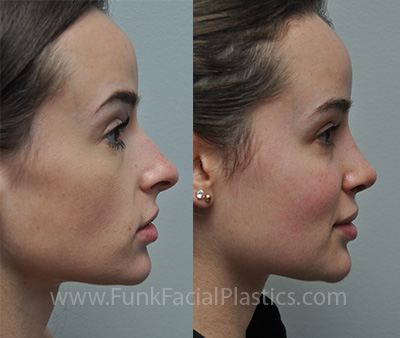
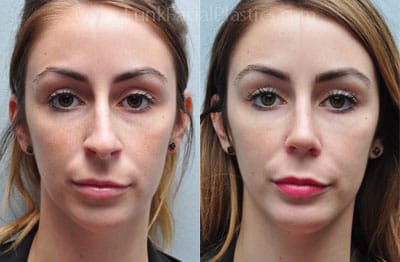
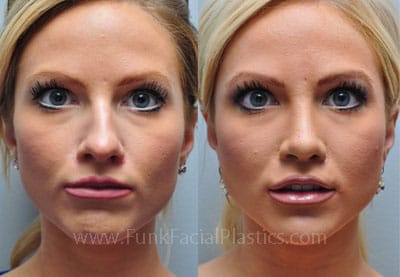
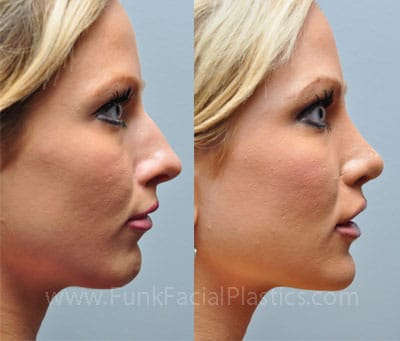
Rhinoplasty was performed in Houston on this patient with an irregular appearing nose. Lip augmentation was also performed with filler.
-
Rhinoplasty was performed in Houston on this patient with an irregular appearing nose. Lip augmentation was also performed with filler.
-

Rhinoplasty was performed in Houston for this patient with a crooked nose, nasal hump, and large nose. She now has a straight and more feminine nose.
-

Rhinoplasty was performed in Houston for this patient with a crooked nose, nasal hump, and large nose. She now has a straight and more feminine nose.
-
This rhinoplasty patient underwent nose straightening in Houston along with refining a bulbous tip and addressing a dorsal hump. Her nose is more feminine and elegant now.
-
This rhinoplasty patient underwent nose straightening in Houston along with refining a bulbous tip and addressing a dorsal hump. Her nose is more feminine and elegant now.
-

This rhinoplasty patient had surgery in Houston for a nasal hump and bulbous tip. Her nose is now more feminine and elegant.
-

This rhinoplasty patient had surgery in Houston for a nasal hump and bulbous tip. Her nose is now more feminine and elegant.
-

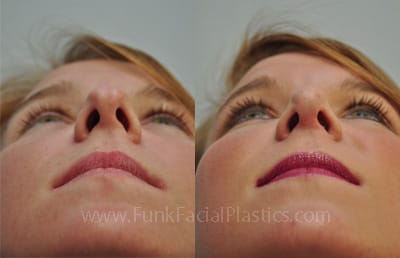
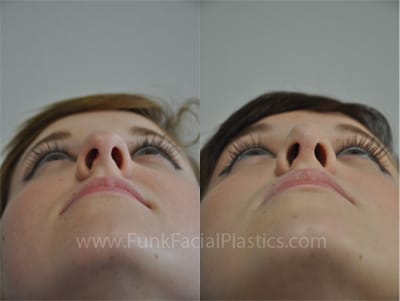
This rhinoplasty patient had surgery in Houston for a nose that just did not fit her face. She now has a smaller nose that fits her face. She was also a mouth breather and it is now evident from the photos that she can breathe freely through her nose.
-

This rhinoplasty patient had surgery in Houston for a nose that just did not fit her face. She now has a smaller nose that fits her face. She was also a mouth breather and it is now evident from the photos that she can breathe freely through her nose.
-
Rhinoplasty for a nasal hump was performed in Houston. She now has a more elegant and feminine nose.
-
Rhinoplasty for a nasal hump was performed in Houston. She now has a more elegant and feminine nose.
-
This patient had rhinoplasty in Houston for a bulbous tip, crooked nose, and nasal hump.
-
This patient had rhinoplasty in Houston for a bulbous tip, crooked nose, and nasal hump.
-

Rhinoplasty was performed on this patient in Houston. Ethnic rhinoplasty is a commonly performed procedure at Funk Facial Plastic Surgery.
-

Rhinoplasty was performed on this patient in Houston. Ethnic rhinoplasty is a commonly performed procedure at Funk Facial Plastic Surgery.
-

This patient underwent rhinoplasty in Houston for a large nose with overprojected tip and nasal hump. Her nose now fits her petite face.
-

This patient underwent rhinoplasty in Houston for a large nose with overprojected tip and nasal hump. Her nose now fits her petite face.
-

Rhinoplasty was performed in Houston to refine this patient's bulbous tip, create better symmetry in the tip, while softening and feminizing the nose.
-

Rhinoplasty was performed in Houston to refine this patient's bulbous tip, create better symmetry in the tip, while softening and feminizing the nose.
-
This rhinoplasty patient had surgery in Houston for a nasal hump and bulbous tip. Her nose is now more feminine, elegant and refined.
-
This rhinoplasty patient had surgery in Houston for a nasal hump and bulbous tip. Her nose is now more feminine, elegant and refined.
-

Rhinoplasty was performed in Houston for a crooked nose, nasal hump, and irregular nose. Her nose is now more feminine and refined.
-

Rhinoplasty was performed in Houston for a crooked nose, nasal hump, and irregular nose. Her nose is now more feminine and refined.
-
This rhinoplasty patient had surgery in Houston for a dorsal hump. Septoplasty for a deviated septum was also performed.
-
This patient had rhinoplasty in Houston for a dorsal hump. Septoplasty for a deviated septum was also performed.
-

Rhinoplasty for a crooked nose and slight hump was performed on this patient in Houston, Texas.
-

This patient had rhinoplasty in Houston for a crooked nose, assymetric tip and slight hump.
-

Rhinoplasty was performed in Houston for this patient with a dorsal hump and bulbous tip to create a more feminine and refined nose.
-

Rhinoplasty was performed in Houston for this patient with a dorsal hump and bulbous tip to create a more feminine and refined nose.
-

This rhinoplasty patient had surgery in Houston for a nasal hump, asymmetric tip, and narrow nostrils. Her nose is now more proportionate to her face and to itself.
-

This rhinoplasty patient had surgery in Houston for a nasal hump, asymmetric tip, and narrow nostrils. Her nose is now more proportionate to her face and to itself.
-

This rhinoplasty patient had nose surgery in Houston to address a wide crooked nose with a strong profile. Her nose now complement her eyes, lips and cheeks.
-

This rhinoplasty patient had nose surgery in Houston to address a wide crooked nose with a strong profile. Her nose now complement her eyes, lips and cheeks.
-

This rhinoplasty patient underwent nose job surgery in Houston to create a smaller more feminine nose. Lower eyelid surgery for lower eyelid bags was also performed.
-

This rhinoplasty patient underwent nose job surgery in Houston to create a smaller more feminine nose. Lower eyelid surgery for lower eyelid bags was also performed.
-

This patient had rhinoplasty in Houston for a nasal hump and crooked nose. Open rhinoplasty was performed to create a softer more feminine nose.
-

This patient had rhinoplasty in Houston for a nasal hump and crooked nose. Open rhinoplasty was performed to create a softer more feminine nose.
-

This rhinoplasty patient had surgery in Houston to create a smaller nose with more elegant and feminine features.
-

This rhinoplasty patient had surgery in Houston to create a smaller nose with more elegant and feminine features.
-
This rhinoplasty patient had surgery in Houston for a crooked nose with a bulbous tip. Her nose is now straighter, more refined, and more feminine.
-
This rhinoplasty patient had surgery in Houston for a crooked nose with a bulbous tip. Her nose is now straighter, more refined, and more feminine.
-
This Houston rhinoplasty patient had a wide nose that was disproportionate to her face. Her nose now fits her face but still looks natural.
-
This rhinoplasty patient had surgery in Houston for a wide nose that was not in harmony with her face. Now she has a more delicate, refined, and feminine nose.
-

Rhinoplasty and a chin implant were performed on this patient in Houston. She now has a more proportioned face with smaller nose and stronger chin.
-

This Houston rhinoplasty patient had a bulbous tip, assymetric nose, and strong profile. Her nose is now more elegant, refined, and feminine.
-

This Houston rhinoplasty patient had a bulbous tip, assymetric nose, and strong profile. Her nose is now more elegant, refined, and feminine.
-

Rhinoplasty and a chin implant were performed on this patient in Houston. She now has a more proportioned face with smaller nose and stronger chin.
-
This patient had rhinoplasty in Houston for a slightly crooked and irregular nose with a large nasal hump. After rhinoplasty, her nose is now more feminine and uniform in appearance.
-
This patient had rhinoplasty in Houston for a slightly crooked and irregular nose with a large nasal hump. After rhinoplasty, her nose is now more feminine and uniform in appearance.
-

This Houston rhinoplasty patient had a nasal hump and overprotected tip. Rhinoplasty created a more elegant, refined, and feminine nose.
-

This Houston rhinoplasty patient had a nasal hump and overprotected tip. Rhinoplasty created a more elegant, refined, and feminine nose. A chin implant was also performed.
-

Rhinoplasty was performed on this patient in Houston for a nasal hump. Her nose now looks more refined, elegant, and feminine.
-

Rhinoplasty was performed on this patient in Houston for a dorsal hump. Her nose is now softer and more feminine.
-

This Houston rhinoplasty patient had a bulbous tip and nasal hump. She wanted a more refined nose that balanced her face.
-

This Houston rhinoplasty patient had a bulbous tip and nasal hump. She wanted a more refined nose that balanced her face.
-

This Houston rhinoplasty patient underwent nose job surgery for a bulbous tip, crooked nose, and nasal hump. Her nose now fits her face and appears much more feminine.
-

This Houston rhinoplasty patient underwent nose job surgery for a bulbous tip, crooked nose, and nasal hump. Her nose now fits her face and appears much more feminine.
-

This Houston rhinoplasty patient underwent nose job surgery for a bulbous tip, crooked nose, and nasal hump. Her nose now fits her face and appears much more feminine.
-

This Houston rhinoplasty patient had a long nose with nasal hump. Her nose is now smaller and more feminine after rhinoplasty with Dr. Funk.
-

This Houston rhinoplasty patient had a long nose with nasal hump. Her nose is now smaller and more feminine after rhinoplasty with Dr. Funk.
-

This Houston rhinoplasty patient had a large nose with a droopy tip and large nasal hump. Her crooked nose was straightened with rhinoplasty and septoplasty.
-

This Houston rhinoplasty patient had a large nose with a droopy tip and large nasal hump. Her crooked nose was straightened with rhinoplasty and septoplasty.
-

This Houston rhinoplasty patient had a crooked nose, bulbous tip, and wide flared nostrils. Rhinoplasty helped achieve a more feminine and softer appearing nose.
-

This Houston rhinoplasty patient had a crooked nose, bulbous tip, and wide flared nostrils. Rhinoplasty helped achieve a more feminine and softer appearing nose. A chin implant was also placed to balance the profile.
-

This Houston rhinoplasty patient desired a more narrowed nose and narrower nostrils.
-

This Houston rhinoplasty patient's nose was narrowed and made more feminine.
-
This Houston rhinoplasty patient desired a smaller nose that was more proportional to her face. Rhinoplasty or nose job surgery improved her appearance and provided a natural more feminine appearance.
-
This Houston rhinoplasty patient desired a smaller nose that was more proportional to her face. Rhinoplasty or nose job surgery improved her appearance and provided a natural more feminine appearance.
-

This Houston rhinoplasty patient had a large nose on profile and desired a more feminine appearance. Nose job surgery achieved this.
-

This Houston rhinoplasty patient had a large nose on profile and desired a more feminine appearance. Nose job surgery achieved this.
-

This Katy, Texas rhinoplasty patient now has a more uniform and feminine appearing nose that fits her face.
-

This Katy, Texas rhinoplasty patient now has a more uniform and feminine appearing nose that fits her face.
-

This Woodlands, TX patient had a deviated septum, crooked nose, nasal hump, and complained her nose was too long. Rhinoplasty and septoplasty achieved a more feminine, softer, and more functional nose.
-

This Woodlands, TX patient had a deviated septum, crooked nose, nasal hump, and complained her nose was too long. Rhinoplasty and septoplasty achieved a more feminine, softer, and more functional nose.
-

This Woodlands, TX patient had a deviated septum, crooked nose, nasal hump, and complained her nose was too long. Rhinoplasty and septoplasty achieved a more feminine, softer, and more functional nose.
-

This Katy, Texas rhinoplasty patient desired a more feminine softer nose.
-

This Katy, Texas rhinoplasty patient desired a more feminine and softer nose.
-

This Houston rhinoplasty patient desired a smaller, straighter nose with a more proportional profile.
-

This Houston rhinoplasty patient desired a smaller, straighter nose with a more proportional profile.
-

This Houston rhinoplasty patient had a crooked nose and nasal hump. Rhinoplasty straightened her crooked nose and created a more feminine profile.
-

This Houston rhinoplasty patient had a crooked nose and nasal hump. Rhinoplasty straightened her crooked nose and created a more feminine profile.
-

This Houston Rhinoplasty patient desired a softer more uniform appearing nose and treatment of her nasal hump.
-

This Houston Rhinoplasty patient desired a softer more uniform appearing nose and treatment of her nasal hump.
-

This Houston rhinoplasty patient desired a softer more feminine nose to fit her face. Notice how after rhinoplasty her eyes, lips, and cheeks seem to be more noticeable.
-

This Houston rhinoplasty patient desired a softer more feminine nose to fit her face. Notice how after rhinoplasty her eyes, lips, and cheeks seem to be more noticeable.
-

This South Houston rhinoplasty patient desired changes for her nose to remove her dorsal hump and create a smaller, softer more feminine nose.
-

This South Houston rhinoplasty patient desired changes for her nose to remove her dorsal hump and create a smaller, softer more feminine nose.
-

This Houston rhinoplasty patient desired a smaller and straighter nose. A deviated septum was also corrected with septoplasty and turbine reduction was performed.
-

This Houston rhinoplasty patient desired a smaller and straighter nose. A deviated septum was also corrected with septoplasty and turbine reduction was performed.
-

This Houston rhinoplasty patient desired a more feminine nose without the nasal hump. A natural, elegant nose was created with rhinoplasty.
-

This Houston rhinoplasty patient desired a more feminine nose without the nasal hump. A natural, elegant nose was created with rhinoplasty.
-

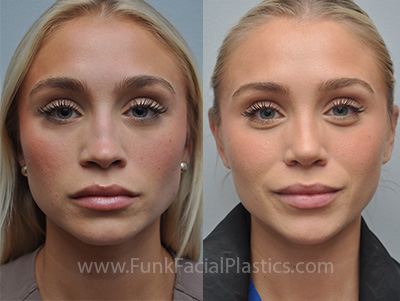
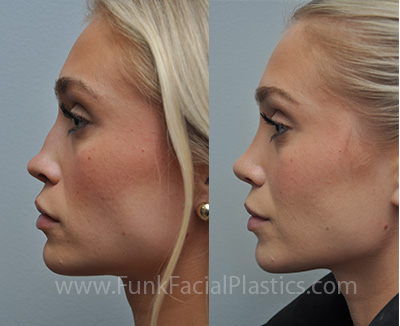
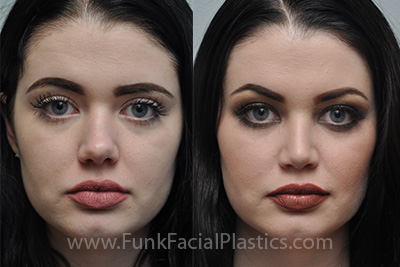
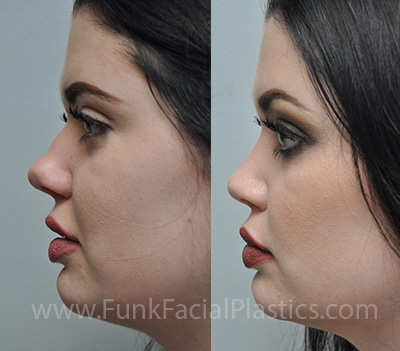
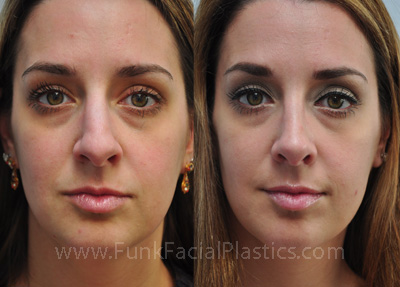
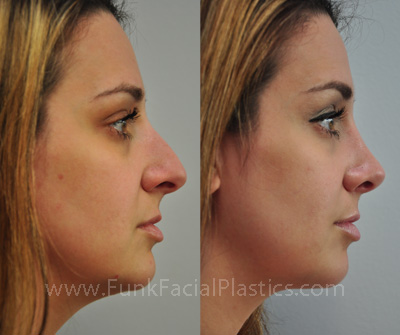
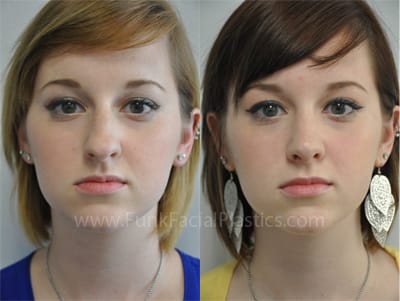
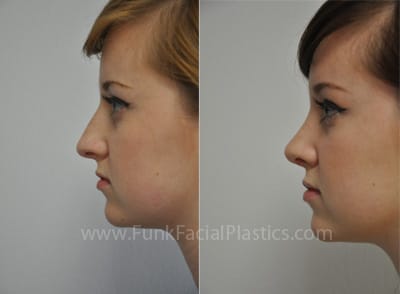
This Austin area rhinoplasty patient had a crooked nose and small hump. She desired a straight nose and smaller more feminine appearance. With her makeup, it's hard to believe this is the same person. Rhinoplasty truly brings out the eyes and lips.
-

This Austin area rhinoplasty patient had a crooked nose and small hump. She desired a straight nose and smaller more feminine appearance. With her makeup, it's hard to believe this is the same person. Rhinoplasty truly brings out the eyes and lips.
-

This rhinoplasty patient from the Houston area had an irregular nose with a nasal hump. The nose now has a smoother contour and improved profile.
-

This rhinoplasty patient from the Houston area had an irregular nose with a nasal hump. The nose now has a smoother contour and improved profile.
-

This Texas patient underwent rhinoplasty and septoplasty for a deviated septum. Her nose is now more feminine, smaller, and well proportioned to her face.
-

This Texas patient underwent rhinoplasty and septoplasty for a deviated septum. Her nose is now more feminine, smaller, and well proportioned to her face.
-

This Galveston rhinoplasty patient had a crooked nose and deviated septum. Septoplasty was also performed to improve her breathing. She now has a small, straighter, and more feminine nose after rhinoplasty.
-

This Galveston rhinoplasty patient had a crooked nose and deviated septum. Septoplasty was also performed to improve her breathing. She now has a small, straighter, and more feminine nose after rhinoplasty.
-

This Texas patient underwent rhinoplasty for a nasal hump and irregular nose with a bulbous tip. Her tip is still a little swollen at 2 months after nose job surgery but healing well.
-

This Texas patient underwent rhinoplasty for a nasal hump and irregular nose with a bulbous tip. Her tip is still a little swollen at 2 months after nose job surgery but healing well.
-

This Houston rhinoplasty patient had a slightly bulbous tip and a dorsal hump. Due to her strong chin, full cheeks, and patient preference, a straight profile was left which created a very natural result.
-

This Houston rhinoplasty patient had a slightly bulbous tip and a dorsal hump. Due to her strong chin, full cheeks, and patient preference, a straight profile was left which created a very natural result.
-

This Houston rhinoplasty patient had a slightly bulbous tip and a dorsal hump. Notice how her nasal tip is more triangular and symmetric now.
-

This Houston patient underwent sinus surgery and septoplasty for a deviated septum. She also had rhinoplasty to correct her crooked nose and wide bulbous tip.
-

This Houston patient underwent sinus surgery and septoplasty for a deviated septum. She also had rhinoplasty to correct her crooked nose and wide bulbous tip.
-

This Texas patient underwent rhinoplasty and septoplasty for a deviated septum. Her nose is now more feminine, smaller, and well proportioned to her face.
-

This Katy patient underwent septoplasty for a deviated septum, rhinoplasty, and turbinate reduction. Notice how her nose is now more refined and feminine after nose job surgery.
-

This Katy patient underwent septoplasty for a deviated septum, rhinoplasty, and turbinate reduction. Notice how her nose is now more refined and feminine after nose job surgery.
-

Rhinoplasty with sinus surgery and septoplasty for this Houston patient to improve nasal breathing and refine the nose.
-

Rhinoplasty with sinus surgery and septoplasty for this Houston patient to improve nasal breathing and refine the nose.
-

This Houston patient underwent rhinoplasty and chin implant. Notice how much more balanced her face is now after nose surgery gave her a smaller nose and the chin augmentation brought her jaw out.
-

This Houston patient underwent rhinoplasty and chin implant. Notice how much more balanced her face is now after nose surgery gave her a smaller nose and the chin augmentation brought her jaw out.
-

This Sugarland patient desired to treat her crooked long nose and remove the nasal hump. Rhinoplasty was performed with a very natural result.
-

This Sugarland patient desired to treat her crooked long nose and remove the nasal hump. Rhinoplasty was performed to obtain a natural result.
-

Rhinoplasty corrected this Houston patient's crooked nose and created a softer more feminine appearance to her face.
-

Rhinoplasty corrected this Houston patient's crooked nose and created a softer more feminine appearance to her face.
-

This Katy patient with a crooked nose and a nasal hump also was a mouth breather with a deviated septum. Rhinoplasty and septoplasty were performed.
-

This Katy patient with a crooked nose and a nasal hump also was a mouth breather with a deviated septum. Rhinoplasty and septoplasty were performed.
-

Rhinoplasty was performed to straighten a crooked nose and provide a softer more feminine nose. Septoplasty for a deviated septum was also performed.
-

Rhinoplasty was performed to straighten a crooked nose and provide a softer more feminine nose. Septoplasty for a deviated septum was also performed.
-

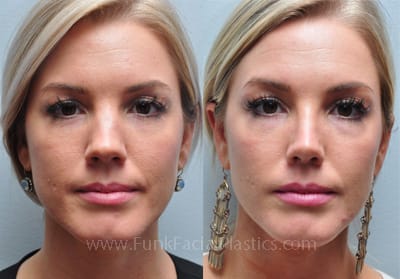
A bulbous or ill defined nasal tip may be a common reason to seek rhinoplasty or nose job surgery as this patient desired. Notice how much more defined this Houston resident's nose is and how the light from the flash reflects more sharply along her bridge after her nose surgery. Her nose is now elegant, softer, and more feminine.
-

A bulbous or ill defined nasal tip may be a common reason to seek rhinoplasty or nose job surgery as this patient desired. Notice how much more defined this Houston resident's nose is and how the light from the flash reflects more sharply along her bridge after her nose surgery. Her nose is now elegant, softer, and more feminine.
-

This rhinoplasty patient from the Valley, TX was a mouth breather as one can see on her frontal photograph. She had a deviated nasal septum which was corrected with septoplasty. Rhinoplasty was also performed taking down her dorsal hump, rotating her nasal tip, and refining the nose in general to create a softer more feminine appearing nose.
-

This rhinoplasty patient from the Valley was a mouth breather as one can see on her frontal photograph. She had a deviated nasal septum which was corrected with septoplasty. Rhinoplasty was also performed taking down her dorsal hump, rotating her nasal tip, and refining the nose in general to create a softer more feminine appearing nose.
-

Rhinoplasty and septoplasty for a deviated septum were performed for this patient from College Station with a crooked nose, nasal hump, and uneven nostrils.
-

Rhinoplasty and septoplasty for a deviated septum were performed for this patient from College Station with a crooked nose, nasal hump, and uneven nostrils.
-

Rhinoplasty and septoplasty for a deviated septum were performed for this patient from College Station with a crooked nose, nasal hump, and uneven nostrils.
-

Deviated septum surgery corrected and helped this Spring, TX patient's breathing while rhinoplasty improved her nasal hump and rotated her droopy tip. Notice how her crooked nose has been straightened and her mouth is now closed on the profile image. She is breathing more through her nose. Many patients who have breathing issues elect to have cosmetic improvement to their nose at the same time of septoplasty.
-

Deviated septum surgery corrected and helped this Spring, TX patient's breathing while rhinoplasty improved her nasal hump and rotated her droopy tip. Notice how her crooked nose has been straightened and her mouth is now closed on the profile image. She is breathing more through her nose. Many patients who have breathing issues elect to have cosmetic improvement to their nose at the same time of septoplasty.
-

Rhinoplasty was performed for this Houston patient with a bulbous nasal tip, nasal hump or bump, and a droopy tip. Notice the nose is more feminine, refined, and elegant with a natural and not a nose job like appearance.
-

Rhinoplasty was performed for this Houston patient with a bulbous nasal tip, nasal hump or bump, and a droopy tip. Notice the nose is more feminine, refined, and elegant with a natural and not a nose job like appearance.
-

This Houston patient with a crooked nose, nasal hump, and droopy tip underwent rhinoplasty or nose surgery. Notice a more feminine nose with a natural unoperated appearance. She also underwent otoplasty at the same time.
-

This Houston patient with a crooked nose, nasal hump, and droopy tip underwent rhinoplasty or nose surgery. Notice a more feminine nose with a natural unoperated appearance. She also underwent otoplasty at the same time.
-

This Houston patient presented with a desire to straighten her crooked nose with rhinoplasty or nose surgery. A crooked nose can be one of the most difficult things to correct with rhinoplasty as cartilage has memory and wants to move back to its original position. Notice the refinement of the nose on profile as well.
-

This Houston patient presented with a desire to straighten her crooked nose with rhinoplasty or nose surgery. A crooked nose can be one of the most difficult things to correct with rhinoplasty as cartilage has memory and wants to move back to its original position. Notice the refinement of the nose on profile as well.
-

Rhinoplasty or nose job refines the nasal tip and provides a more feminine profile for this Richmond, Texas patient. Notice how the light reflects off her nose more sharply on the frontal view.
-

Rhinoplasty or nose job refines the nasal tip and provides a more feminine profile for this Richmond, Texas patient. Notice how the light reflects off her nose more sharply on the frontal view.
-

This Katy patient had an obvious nasal valve collapse on the right and a long nose with a crooked pointy tip. Notice how much more natural and refined her nose appears in the after photos and how rhinoplasty has made her eyes shine that much more.
-

This Katy patient had an obvious nasal valve collapse on the right and a long nose with a crooked pointy tip. Notice how much more natural and refined her nose appears in the after photos and how rhinoplasty has made her eyes shine that much more.
-

This Katy patient had a pinched nose with a nasal hump. Notice how the light is accentuated over the bridge of her nose. After rhinoplasty, the light reflex is sharpest over the tip of the nose.
-

This Katy patient had a pinched nose with a nasal hump. Notice how the light is accentuated over the bridge of her nose. After rhinoplasty, the light reflex is sharpest over the tip of the nose.
-

Rhinoplasty or nose surgery for a crooked nose, uneven nostrils, and a nasal hump on this Pearland patient.
-

Rhinoplasty or nose surgery for a crooked nose, uneven nostrils, and a nasal hump on this Pearland patient.
-

Rhinoplasty or nose surgery for a crooked nose, uneven nostrils, and a nasal hump on this Pearland patient.
-

This Galveston patient underwent functional and cosmetic nose surgery. Notice the nose was made shorter and the tip rotated.
-

This Galveston patient underwent functional and cosmetic nose surgery. Notice the nose was made shorter and the tip rotated.
-

Rhinoplasty before and after by Houston surgeon Dr. Funk. This patient also had a septoplasty for a deviated septum and sinus surgery for sinusitis.
-

Rhinoplasty before and after by Houston surgeon Dr. Funk. This patient also had a septoplasty for a deviated septum and sinus surgery for sinusitis.
-

Rhinoplasty and Septoplasty for a deviated septum were performed for this Houston patient. She is now loving her nose and breathing better!
-

Rhinoplasty and Septoplasty for a deviated septum were performed for this Houston patient. She is now loving her nose and breathing better!
-

This Sugarland patient appears after nose surgery for deviated septum and cosmetic changes. She also underwent a chin implant.
-

This Sugarland patient appears after nose surgery for deviated septum and cosmetic changes. She also underwent a chin implant
-

This Bellaire patient is shown after rhinoplasty, nose surgery, and septoplasty for functional and cosmetic nasal concerns.
-

This Bellaire patient underwent cosmetic nose surgery and correction of a deviated septum with septoplasty.
-

This Houston patient underwent cosmetic nose surgery and correction of a deviated septum with septoplasty.
-

A Houston patient with a deviated septum and nasal hump before and after rhinoplasty or nose job and septoplasty.
-

A Houston patient with a deviated septum and nasal hump before and after rhinoplasty or nose job and septoplasty.
-

A Houston patient with a deviated septum and nasal hump before and after rhinoplasty or nose job and septoplasty.
-

This Houston patient had breathing, crusting, and whistling issues with her nose. She also desired cosmetic changes to the appearance of her nose. Rhinoplasty combined with septal perforation repair was performed and a deviated septum was corrected. Aesthetic changes were made as seen.
-

This Houston patient had breathing, crusting, and whistling issues with her nose. She also desired cosmetic changes to the appearance of her nose. Rhinoplasty combined with septal perforation repair was performed and a deviated septum was corrected. Aesthetic changes were made as seen.
-

This Houston patient had breathing, crusting, and whistling issues with her nose. She also desired cosmetic changes to the appearance of her nose. Rhinoplasty combined with septal perforation repair was performed and a deviated septum was corrected. Aesthetic changes were made as seen.
-

A Woodlands patient with a crooked nose who desired a much smaller nose with hump reduction. Sinus surgery was also performed.
-

A Woodlands patient with a crooked nose who desired a much smaller nose with hump reduction. Sinus surgery was also performed.
-

A Houston patient who underwent rhinoplasty, septoplasty, and sinus surgery
-

A Houston patient who underwent rhinoplasty, septoplasty, and sinus surgery
-

This El Paso patient is shown after rhinoplasty for nasal hump, droopy nasal tip, and crooked nose.
-

This El Paso patient is shown after rhinoplasty for nasal hump, droopy nasal tip, and crooked nose.
-

A Kingwood patient with severeley deviatated septum requiring septoplasty and sinus surgery. Rhinoplasty was performed to improve hump and hanging tip. Rhinoplasty for Deviated Septum
-

A Kingwood patient with severeley deviatated septum requiring septoplasty and sinus surgery. Rhinoplasty was performed to improve hump and hanging tip. Rhinoplasty for Deviated Septum
-

A Kingwood patient with severeley deviatated septum requiring septoplasty and sinus surgery. Rhinoplasty was performed to improve hump and hanging tip. Rhinoplasty for Deviated Septum
-

Rhinoplasty or nose job surgery was performed on this Houston patient to straighten her crooked nose and create a more feminine softer profile.
-

Rhinoplasty or nose job surgery was performed on this Houston patient to straighten her crooked nose and create a more feminine softer profile.
-

This Houston patient had droopy tip that was also boxy. She had a nasal hump. Rhinoplasty and neck liposuction were performed with natural results.
-

This Houston patient had droopy tip that was also boxy. She had a nasal hump. Rhinoplasty and neck liposuction were performed with natural results.
-

This Houston patient had a boxy nasal tip and a small hump. She desired a natural unoperated appearance to her nose. Nose surgery was performed with natural results.
-

This Houston patient had a boxy nasal tip and a small hump. She desired a natural unoperated appearance to her nose. Nose surgery was performed with natural results.